Get in touch with Suzhou UDTECH Technology Co., Ltd. Company

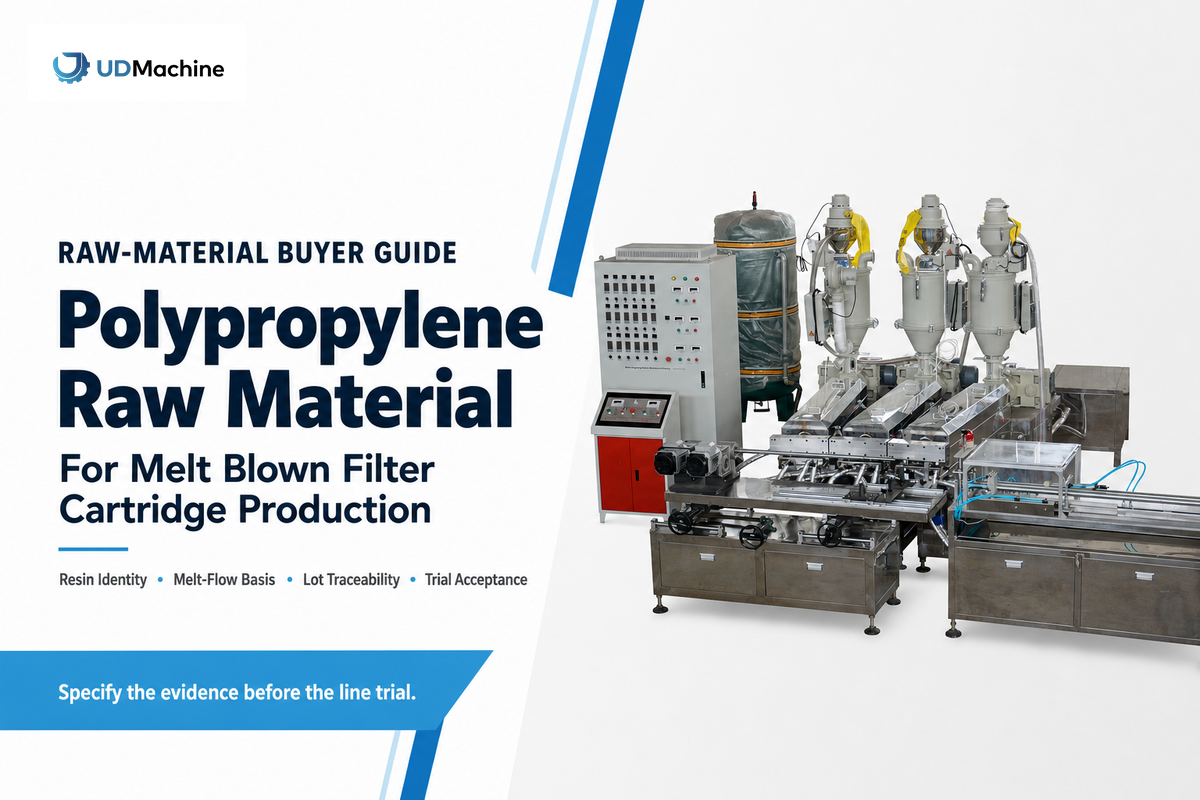
Polypropylene raw material for melt blown filter cartridge refers to an identified resin product and lot with a recorded test basis, change controls, handling history, trial record, and intended finished cartridge; labels such as “PP”, “pure PP”, or “food grade” are not complete specifications.
Direct answer
Freeze the supplier, grade, lot, melt-flow method and test condition, additive and substitution limits, representative sampling basis, storage and processing history, and a controlled line trial. Keep resin processability, machine acceptance, finished-cartridge performance, chemical-release evidence, and regulated-use claims as separate approval layers.
The four questions that prevent a false approval
- Do the resin identity and lot records refer to the material actually delivered?
- Can the reported melt-flow value be compared on the same method, condition, technique, and apparatus basis?
- Did the line trial hold conversion variables steady enough to isolate a material effect?
- Which finished-product claim, exposure condition, and certification route still need separate evidence?
What counts as polypropylene raw material for a melt-blown filter cartridge?
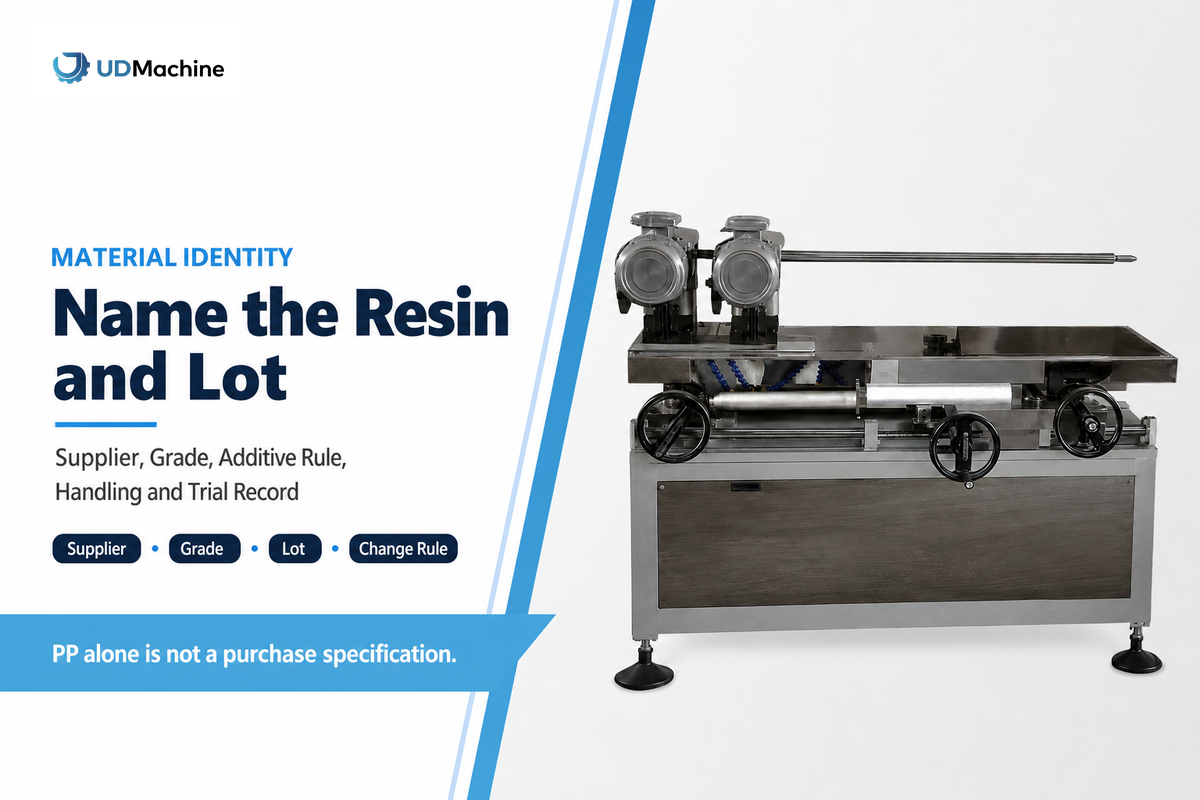
For buying purposes, tie the polypropylene resin to a specific producer and commercial designation, then retain its grade and production lot as one traceable unit. A polymer label establishes only a starting identity; process stability, cartridge performance, and suitability for a particular use still need their own evidence.
Identity
Manufacturer, product designation, grade, lot, packaging, and delivery date.
Evidence
TDS, SDS, agreed lot report, additive declaration, and change notice.
Qualification
Representative sample, recorded trial, accepted result, and disposition.
Virgin, recycled, controlled-rheology, additive-modified, application-specific, or food contact are some indicative terms but none is a complete specification of a cartridge line. The buyer must communicate the required attribute, the basis of verification, and the consequence of a supplier’s formulation or source change.
Scope boundary: a resin declaration can support material review. It cannot certify the production machine or replace performance, migration, extractables, potable-water, or contaminant-reduction evidence for the finished cartridge.
Why the melt-flow number needs a complete test basis
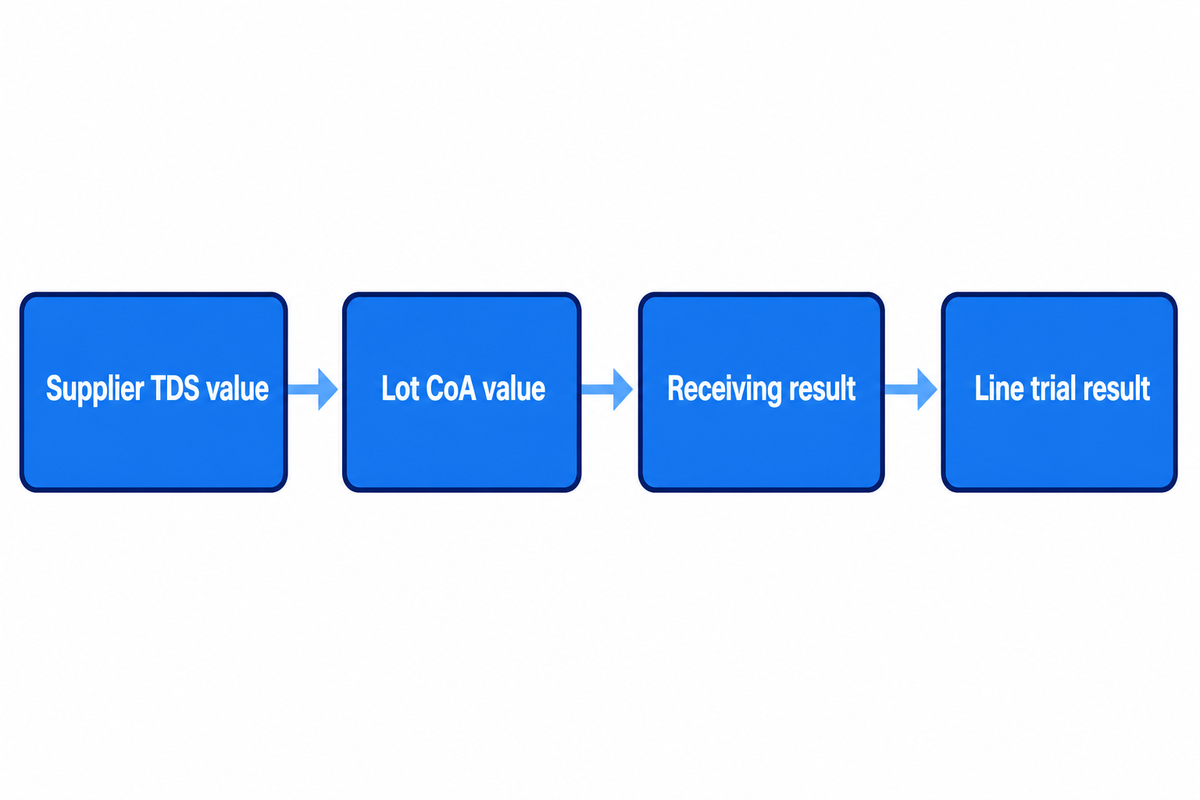
A usable MFR or MFI record names the referenced method, temperature, applied load, procedure, units, specimen history, and laboratory; without that basis, the value remains incomplete. ASTM D1238-26 also warns that technique, apparatus geometry, and conditions can create discrepancies, so matching headline temperature and load do not guarantee equivalent results.
Condition-qualified example, not a target: one reviewed supplier sheet reports 800 g/10 min at 230°C under 2.16 kg. Writing only 800 g/10 min discards the basis; a comparable record retains 800 g/10 min, 230°C and 2.16 kg with the named grade and method.
| Record | What must travel with it | Decision use |
|---|---|---|
| Supplier TDS value | Named grade and declared method/condition | Candidate screening |
| Lot CoA value | Lot, sampling basis, method, condition, lab | Delivery evidence |
| Receiving result | Sample location, conditioning, apparatus, operator | Agreement check |
| Line trial result | Resin lot plus conversion and cartridge records | Process qualification |
Matching reported MFR does not make two resins equivalent: molecular-weight distribution, melt elasticity, and behavior through a melt-blowing line’s shear and temperature history can still differ.
The reviewed literature includes PP examples spanning 500 g/10 min to 900 g/10 min at a reported 230°C and 2.16 kg, while one pilot-line comparison changes air pressure from 70 kPa to 140 kPa. Such numbers show why the material and conversion basis must accompany each other, as they aren’t cartridge acceptance limits. As a same-basis reading exercise, compare the 500 g/10 min and 900 g/10 min examples at 230°C under 2.16 kg, compare 70 kPa with 140 kPa only within the cited pilot setup, and keep the separate 800 g/10 min supplier value attached to its own method and condition.
Do not copy a universal range: published and commercial sources show different PP values under stated conditions, but they do not justify one “best” 1000–1600 g/10 min rule for every die, cartridge geometry, and operating window. Compare on a common test basis, then qualify the named grade on the intended line.
Which supplier documents belong in the buying file?
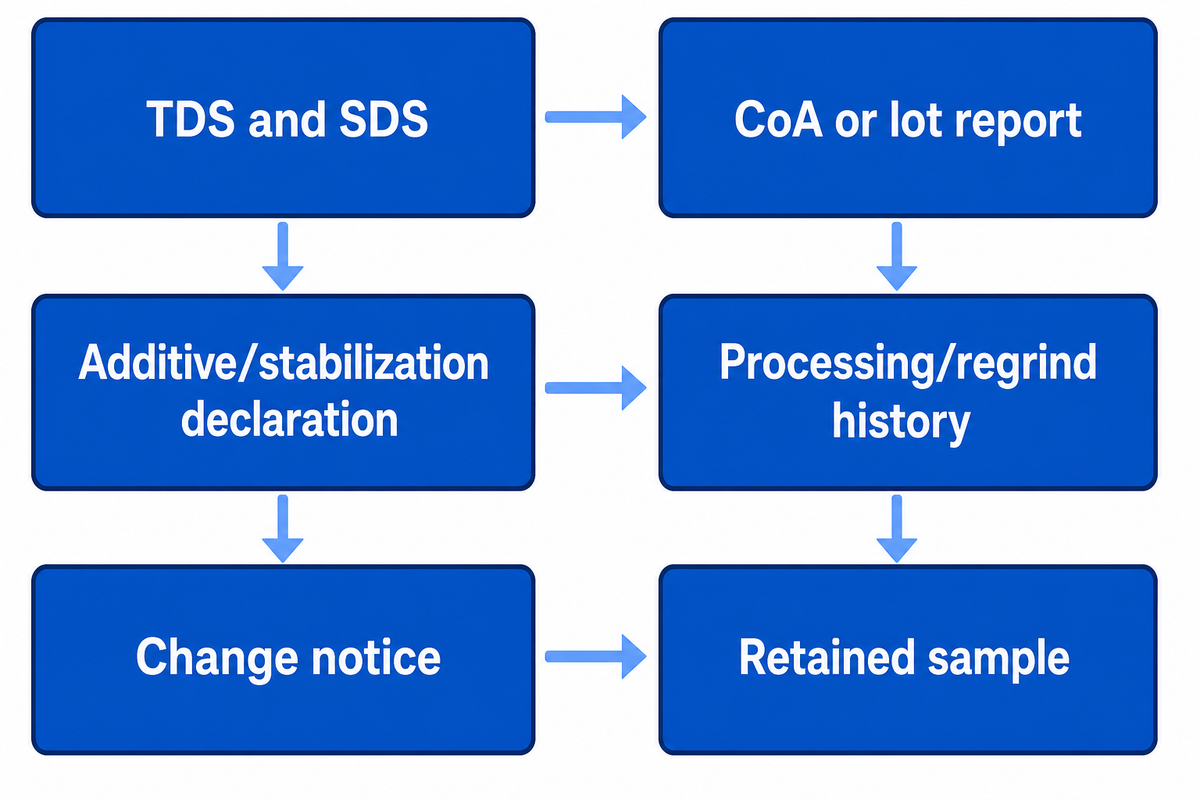
Build the file on the basis of the decisions made rather than the number of documents. Give every record a decision role: material identification, controlled-characteristic definition, change disclosure, traceability, or direct support for the agreed trial and disposition. For example, preserve 230°C, 2.16 kg, and 70–140 kPa as condition-bearing entries rather than detached numbers.
| Record | Minimum link | What it cannot prove alone |
|---|---|---|
| TDS and SDS | Exact supplier and product designation | Delivered-lot conformity |
| CoA or lot report | Lot, sample basis, method and condition | Homogeneity across every bag or silo |
| Additive/stabilization declaration | Allowed package and notification rule | Finished-cartridge chemical release |
| Processing/regrind history | Prior heat and conversion exposure | Performance in the new line |
| Change notice | What changed, when, and affected lots | Automatic equivalence |
| Retained sample | Sample ID, location, date, seal and storage | Whole-lot representation without a plan |
For fully stabilized or compounded polyolefin resin, ASTM D3895-19 describes oxidative-induction time as a qualitative stabilization measure that may support incoming quality control. ASTM D3895 says accelerated OIT can be misleading, provides no accepted sampling procedure, and does not establish finished-product life; use it only when its scope and interpretation fit the agreement.
Representative sampling is a specification field: name how many packages or stream points are sampled, how increments are combined, which sample is retained, and what variation triggers quarantine. A complete certificate attached to an unrepresentative sample is still incomplete evidence.
How can resin variability change fibre formation?
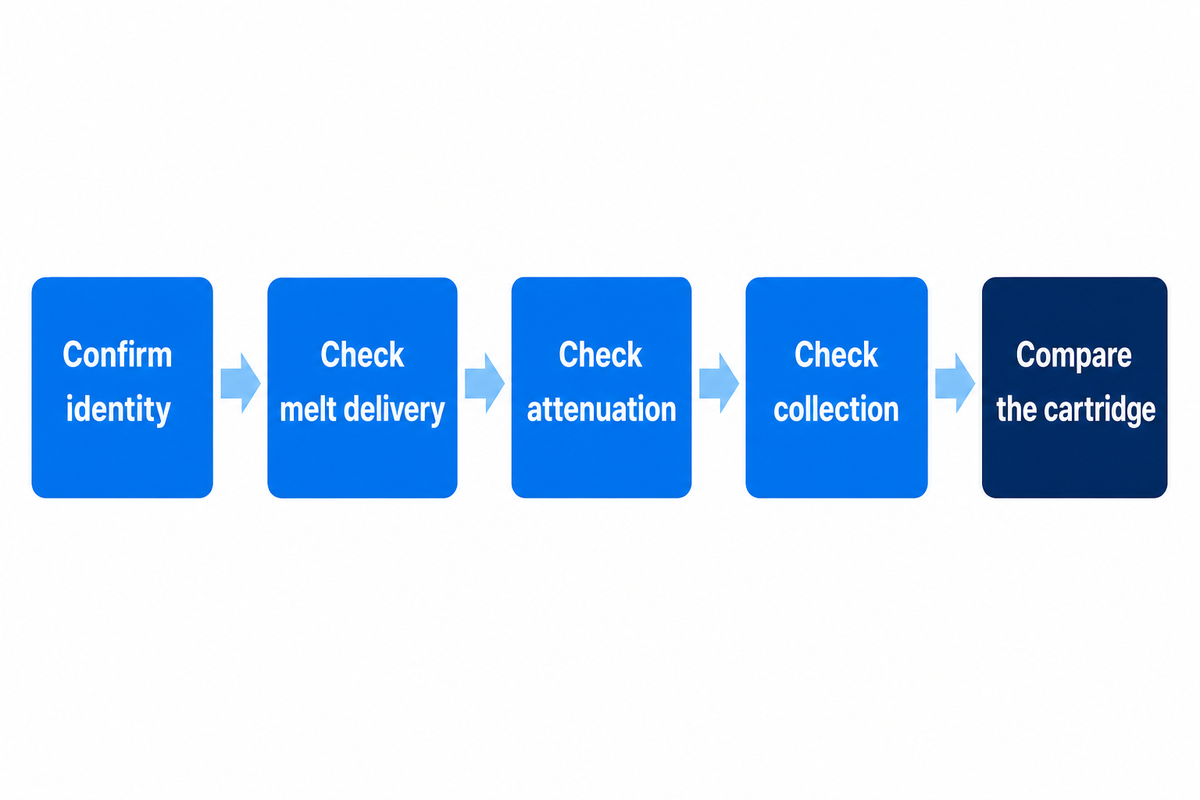
Melt-blown fibre formation links polymer delivery, process heat, high-velocity air attenuation, die condition, collection, and cooling. A change in fiber or pore structure therefore may originate in the resin, in the line, or from an interaction of the two during qualification.
1. Confirm identity — supplier, grade, lot, additive rule and handling history.
2. Check melt delivery — temperature, pressure trend, throughput, residence basis and interruptions.
3. Check attenuation — air temperature, pressure or flow basis, stability and die cleanliness.
4. Check collection — distance, mandrel motion, traverse and cooling.
5. Compare the cartridge — mass, dimensions, visible defects, structural result and the agreed functional test.
Degradation research that’s peer reviewed reports that multiple extrusions of PP can lower the average molar mass and alter the viscosity and the melt elasticity. This demonstrates that a trial should focus on maintaining the barrel and die temperatures, throughput or residence basis, air conditions, stops, and sampling times rather than placing the blame on the incoming lot for all of the changes.
Trial-Cause Attribution Ladder: change one controlled factor at a time when practical. If several variables move together, record the run as a combined-condition trial and do not claim that it proves a single resin cause.
What is meltblown material?
Meltblown material is a fibrous web formed by extruding a thermoplastic melt through small die openings and attenuating the emerging streams with high-velocity heated air. In a cartridge line, meltblown fibers are collected to form a structurally defined tubular wall, whose structure depends on the linked material and process conditions.
Practical implication: “meltblown grade” is still not a line recipe. The grade must be named, the reported data must retain their test basis, and the actual cartridge must be qualified.
Virgin, recycled and additive-modified PP: what should be controlled?
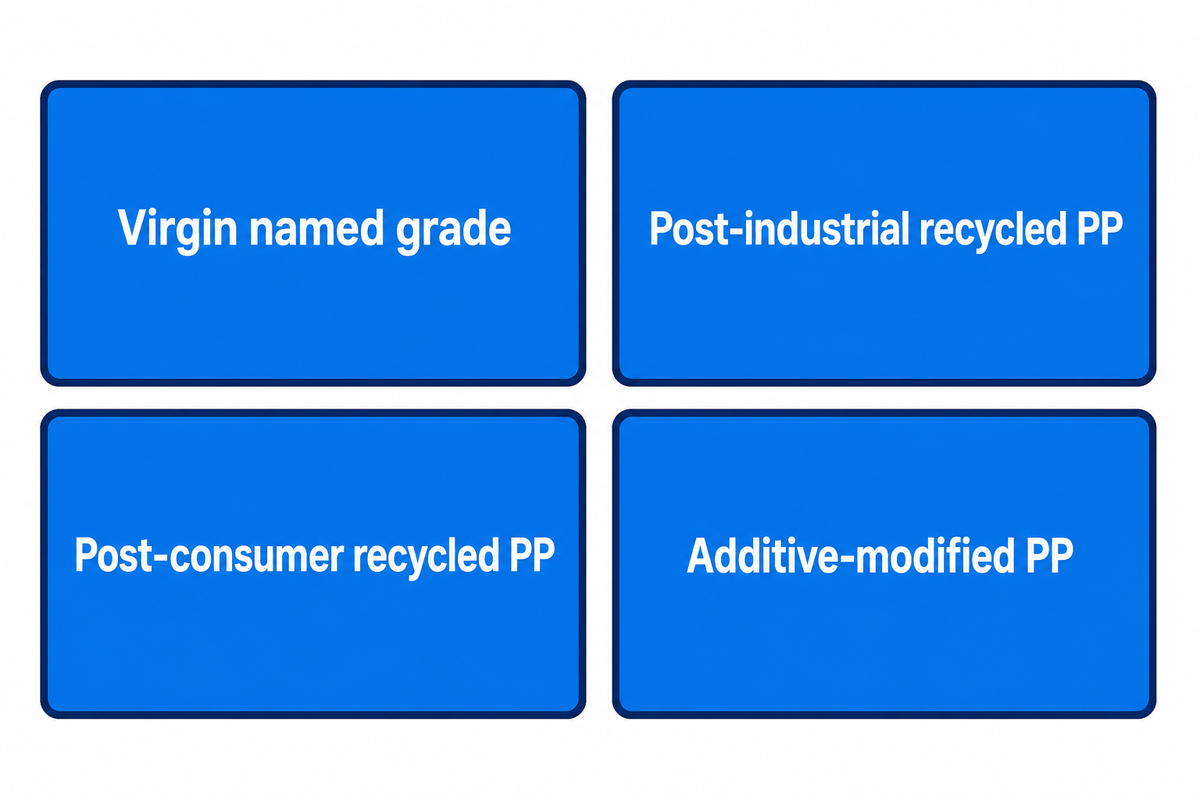
Handle a substitution as a controlled change, and set requalification depth according to source, formulation, intended use, and the agreed risk triggers. This is not a blanket prohibition on the use of recycled or modified PP, nor does each nominal change automatically warrant a full validation program.
| Input | Questions to close | Evidence boundary |
|---|---|---|
| Virgin named grade | Identity, lot, additive package, change notice | Not automatically cartridge-approved |
| Post-industrial recycled PP | Known source, prior process, segregation, consistency | Source history still needs proof |
| Post-consumer recycled PP | Source control, cleaning, contaminants, NIAS, unauthorized adjuvants | Paperwork and a line trial do not prove purity |
| Additive-modified PP | Additive identity, level, purpose, stability, change rule | Air-filter research does not prove liquid use |
ISO 5677:2023 can help processors and buyers agree on characterization of mechanically recycled PP or PE pellets for conventional plastics processing. ISO 5677’s public scope leaves country-specific public-safety, food-safety, and environmental regulations outside the characterization; that record therefore does not approve an intended use.
Risk-based trigger examples: a new supplier, feedstock source, additive package, recycled-content route, unapproved regrind, changed cleaning process, or unexplained lot trend can justify additional review. The required response can range from document review to targeted testing and a controlled line trial.
Where food-contact and drinking-water claims stop
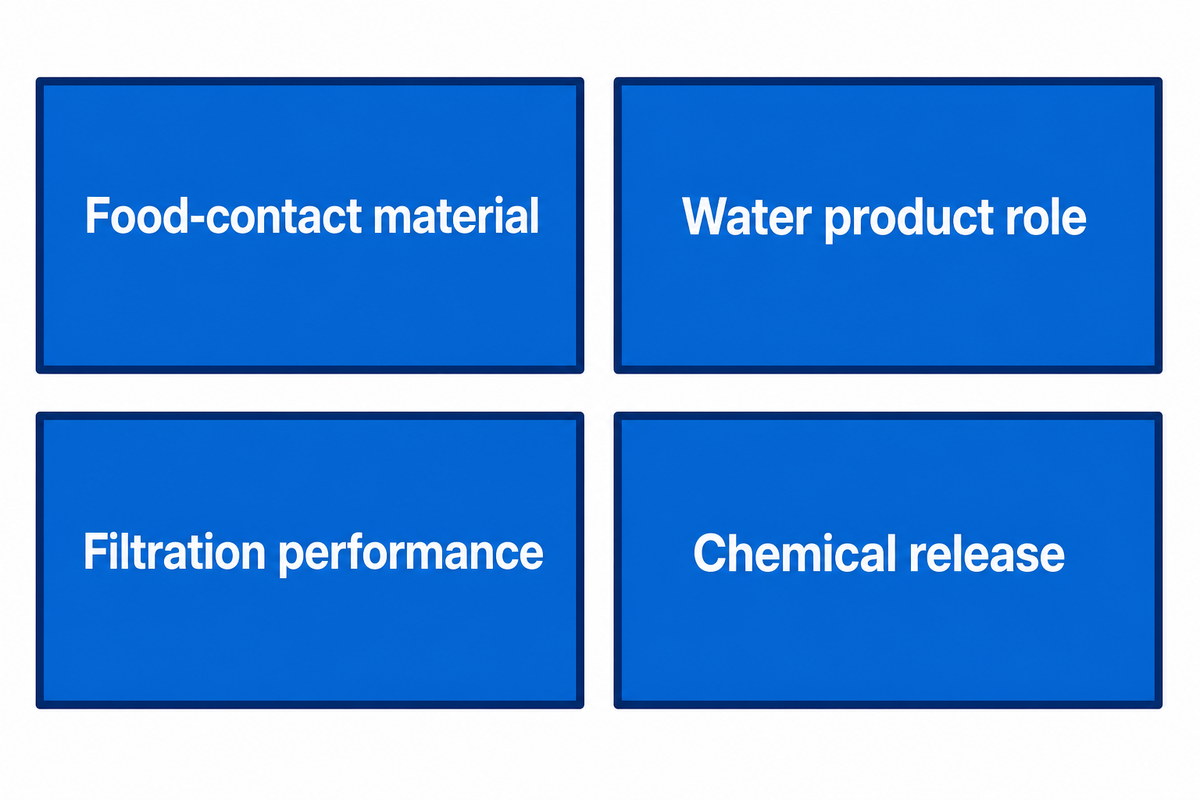
Start with the intended finished-product role and claim. Following the substitution review above, separate resin identity and change control from component effects on drinking-water quality, point-of-use reduction certification, filtration performance, and chemical-release evidence for the finished cartridge, because each approval answers a different question.
Search-intent boundary: “melt blown polypropylene filter” often signals a finished media or filter-product search, “PP melt blown filter cartridge machine” points to production equipment, and “melt blown filter mask” points to mask-media production. This guide addresses resin evidence for cartridge-line purchasing; it does not define mask production or select a finished filter.
A resin rule, a component-effects assessment, a point-of-use contaminant-reduction certification, a filtration-performance assessment, and a chemical-release assessment answer different questions.
1. Food-contact material
21 CFR 177.1520 conditionally addresses specified olefin polymers and article uses. It doesn’t certify the machine or every filter.
2. Water product role
Identify component versus point-of-use or point-of-entry treatment system before selecting a standard route.
3. Filtration performance
Efficiency, pressure drop, capacity, compatibility and service life require declared conditions.
4. Chemical release
Extractables, leachables or migration depend on formulation, geometry, medium, temperature and time.
NSF explains that NSF/ANSI/CAN 61 addresses contaminants or impurities imparted to drinking water by materials and components, but does not establish filtration performance, taste and odor, or microbial-growth support. That makes it a boundary source, not a universal filter-performance certificate.
Claim routing: NSF/ANSI 42 addresses specified aesthetic claims for point-of-use and point-of-entry systems, while NSF/ANSI 53 addresses specified contaminant-reduction claims. The certification and reduction claim must match the actual product; the resin name cannot inherit them.
Research on pharmaceutical filter cartridges has reported polyolefin-related extractables, antioxidant degradation products, hydrocarbons, processing aids, and substances originating in manufacturing. This doesn’t constitute proof for a PP melt-blown liquid cartridge; however, it illustrates the reason why the chemical release of finished components can be a separate, unique evidence issue for the application.
Exposure basis: when chemical-release evidence is relevant, bind it to the complete formulation, finished-cartridge geometry and surface relationship, contact medium, temperature, duration, cleaning, and intended use. Do not transfer a result from a different cartridge construction or exposure scenario without a justified comparison.
Is polypropylene safe for water filters?
Polypropylene can be used in water-filtration products, but the polymer name alone does not prove that a particular cartridge is suitable for drinking water. Define the product role, all materials, the proposed use conditions, and the function or regulated-use claim to be made in order to select the appropriate test or certification scheme.
Machine boundary: a PP melt-blown production line forms the cartridge under controlled conditions. It does not grant food-contact, potable-water, contaminant-reduction, or extractables approval to the finished product.
How should cartridge-brochure terms be handled?
A supplier may use the term pp melt blown filter, polypropylene filter media, depth filter, liquid filter, or filter element to describe a product. These names don’t warrant a micron rating, filtration efficiency, dirt holding capacity, pressure drop, or chemical compatibility.
Brochure-language routing: Searches for a liquid filter cartridge, depth filter cartridges, a cartridge filter, a PP filter, or high flow filter cartridges identify product families, not evidence. Phrases such as polypropylene melt blown, melt-blown polypropylene, polypropylene melt-blown, melt blown depth, proprietary melt blown, depth filtration, polypropylene polymer, graded pore structure, and increased surface area describe material or construction language that still needs a defined test basis. Statements that filter cartridges offer lower initial pressure drop, solve filtration problems, meet filtration needs, suit liquid filtration or process applications, or share certain melt blown filter features remain duty- and test-specific.
| Language category | What must be checked |
|---|---|
| Gradient, graded density filter, microfiber or pure polypropylene fiber | Define the actual polypropylene construction, pore profile, formulation and test method. |
| Pre-filtration, RO pretreatment, water treatment, food and beverage, or other filtration applications | Bind the filtration solution to the real fluid, housing, duty, exposure and acceptance criteria. |
| High flow, high flow rates, low pressure drop, high dirt holding capacity or long service life | Treat each as a test-dependent claim; “economical” or “cost-effective” also needs a stated comparison basis. |
| Pleat, membrane, string wound, fine filtration, absolute filtration or sterile filtration | Do not borrow a result from a different filtration device or construction for a PP melt blown filter cartridge. |
| Virgin, recycled or additive-modified | Verify source, formulation, prior processing, consistency and the approved change-control route. |
| Meltblown grade or controlled-rheology | Keep the named grade, lot and complete melt-flow test basis attached to the trial. |
| Food-contact or drinking-water suitable | Identify the finished-product role, intended conditions, jurisdiction and exact claim route. |
| Trial passed or machine accepted | Keep machine function evidence separate from cartridge performance and regulated-use qualification. |
Compatibility boundary: exposure to a solvent, surfactant, adhesive, cleaner or process fluid can change the evidence needed. Test the complete cartridge under declared operating conditions rather than assigning reliable filtration or extended service life from the resin name.
For sediment or particulate matter duties in water purification, record the particle challenge and downstream acceptance method instead of relying on a product label. Behavior during melting is part of the process record, while an O-ring or other assembly material is part of the finished cartridge compatibility review.
How should a resin trial be designed before line acceptance?
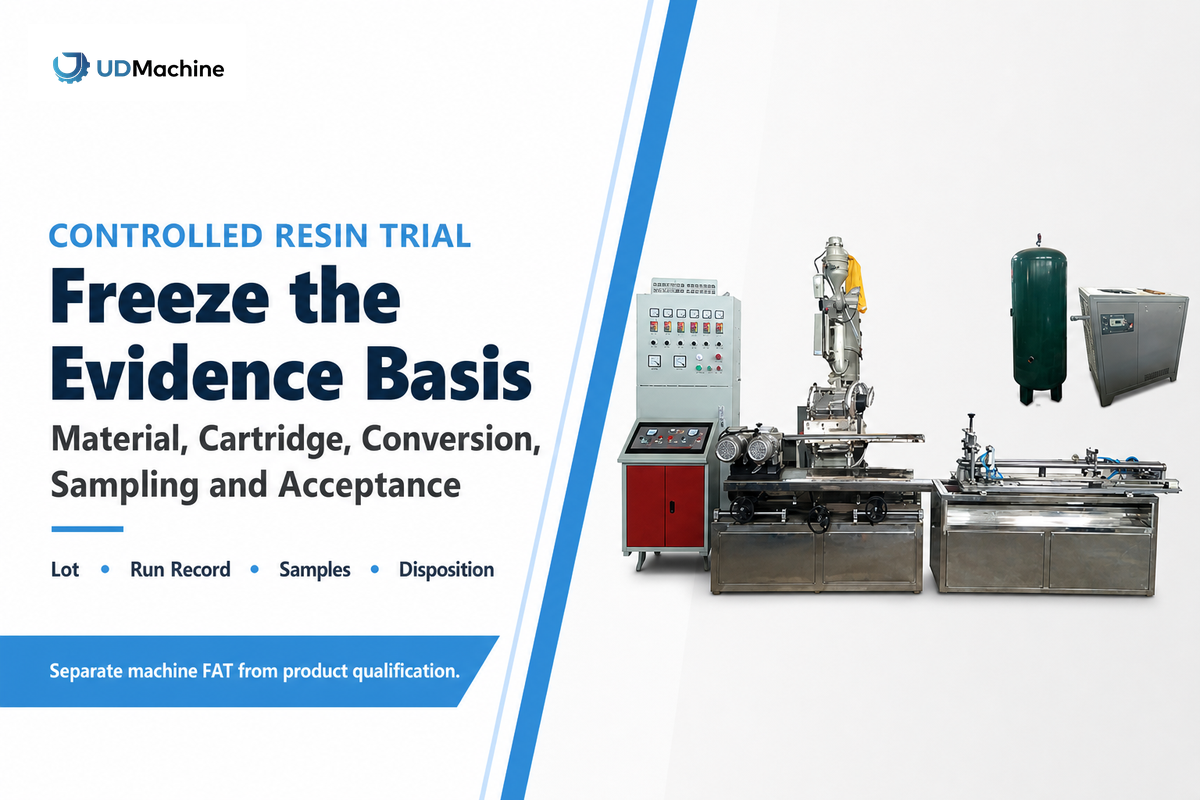
A useful resin trial freezes the lot, cartridge definition, conversion record, sampling points, observations, and decision rule. It changes one variable at a time when feasible, identifies any combined-condition runs honestly, and explicitly records the reason for every accepted exception.
| Freeze | Record | Decide |
|---|---|---|
| Material | Supplier, grade, lot, package and sample IDs | Correct input and traceability? |
| Cartridge | Length, OD, ID, mass, surface and end condition | Comparable geometry? |
| Conversion | Temperatures, throughput/residence basis, pressure, air, motion and stops | Stable, attributable run? |
| Sampling | Warm-up exclusion, time points, positions and retained samples | Representative evidence? |
| Acceptance | Machine checks, sample observations and downstream tests | Approve, trial, quarantine or reject? |
Reject silent zero defaults: a downloaded run record showing 0°C, 0 kg/h, 0 kPa, 0 m/min, 0 m³, 0 rpm, 0 mm, 0 kW, 0 V, 0 A, 0 g, 0 kg or 0% yield should be treated as missing unless zero is physically meaningful for that field. Preserve the raw sensor export and state the unit beside every accepted value.
Factory acceptance and product qualification should be signed as separate evidence layers. The first layer can confirm agreed machine functions under witnessed production conditions; the second uses the actual cartridge and intended service conditions to establish filtration or regulated-use claims.
Failure protocol: preserve the exact sample, alarm and trend record; do not tune several settings until the sample passes and then call the resin qualified. Record the deviation, proposed cause, controlled next run, and disposition.
The 14-field Resin Lot Qualification Passport
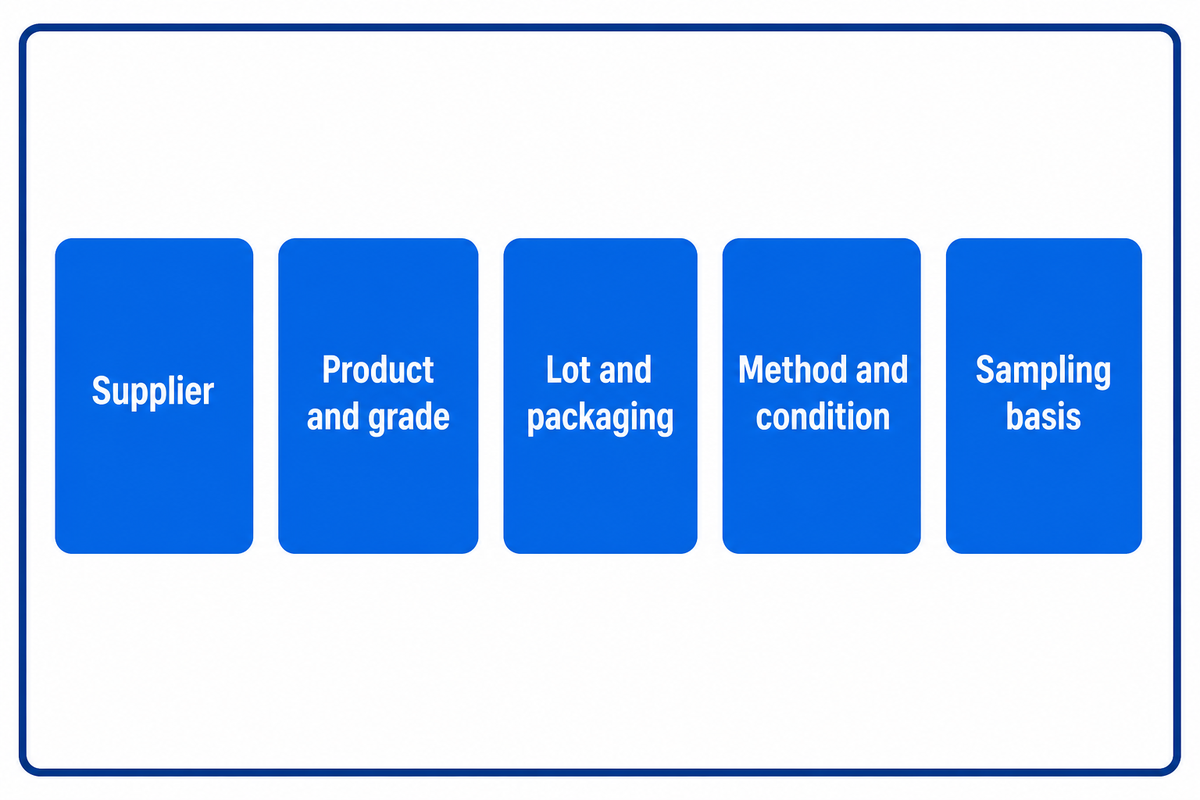
The Resin Lot Qualification Passport is unique to the buyer and isn’t an industry standard. It gives procurement, process engineering, quality, and the machine supplier one controlled page for the evidence they need.
1. Supplier
2. Product and grade
3. Lot and packaging
5. Apparatus/lab basis
6. Agreed values
7. Additive/stabilization rule
8. Processing/regrind history
9. Storage and handling
10. Sampling basis
11. Sample IDs
12. Line operating record
13. Cartridge/test results
14. Disposition and approvers
The Passport should identify the source of each field and the person who approved it. Blank, conflicting, or supplier-substituted fields remain visible instead of disappearing into email attachments.
Evidence handoff rule: the Passport can prove that a defined review happened. It cannot make an unrepresentative sample representative or convert missing finished-product evidence into approval.
From resin evidence to a production-line quotation
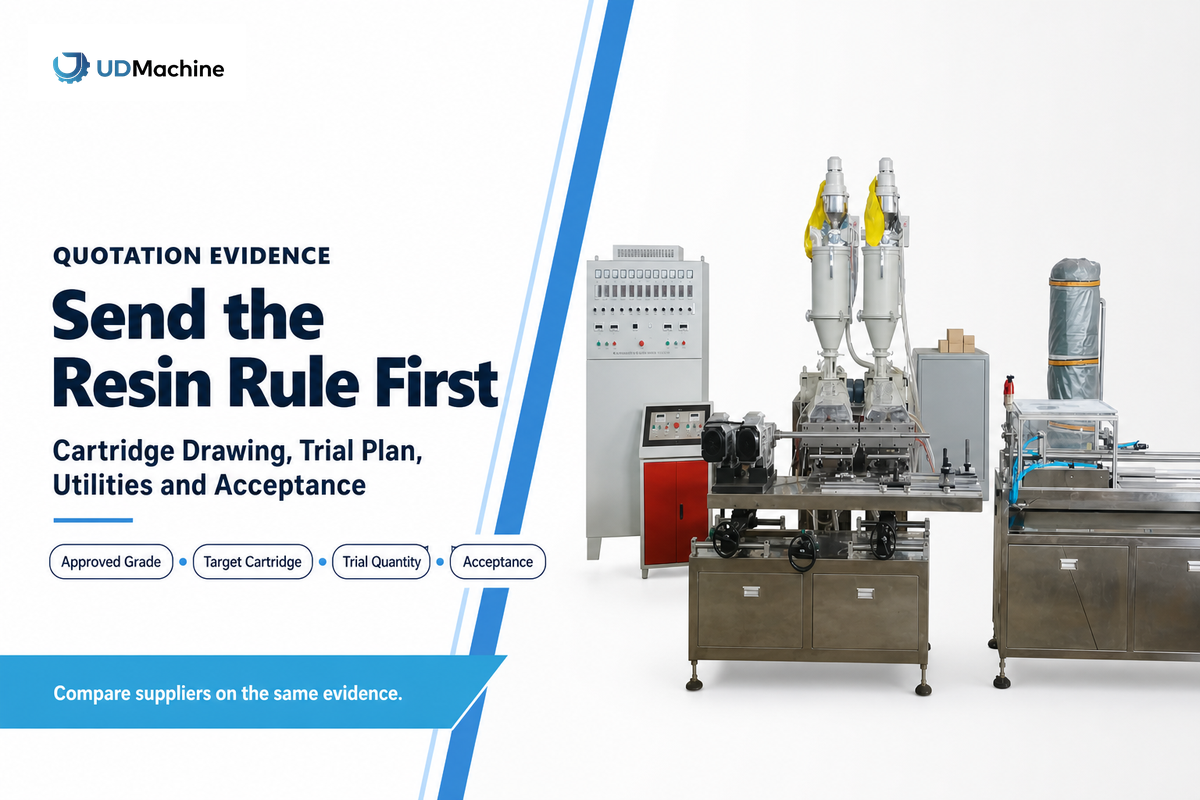
Together with the target cartridge drawing, the trial quantity, utility conditions, sampling plan, and definition of the accepted product, send the approved resin rule. The result is a comparable machine proposal, without requiring the line supplier to invent the customer’s regulatory or finished-filter claims.
Raw-Material Evidence Handoff Card
- Resin approval owns: identity, lot, test basis, additive/change rule and sampling.
- Machine FAT owns: agreed functions, controls, utilities, operating record and sample production.
- Finished-product qualification owns: cartridge performance, chemical release, compatibility and applicable claims.
To hand off information, use UDTECH’s polypropylene cartridge production planning page. Include resin grade or equivalence rules, additive constraints, lot identity, target cartridge, trial plan, utilities, and machine acceptance. Ensure all project-specific fields have a visible status for evidence while quoting.
First-party scope: the linked page supports UDTECH’s published project-intake and production-line planning fields. It is not used here as independent proof of a resin property, cartridge performance, or certification.
Decision framework: approve, trial, quarantine or reject
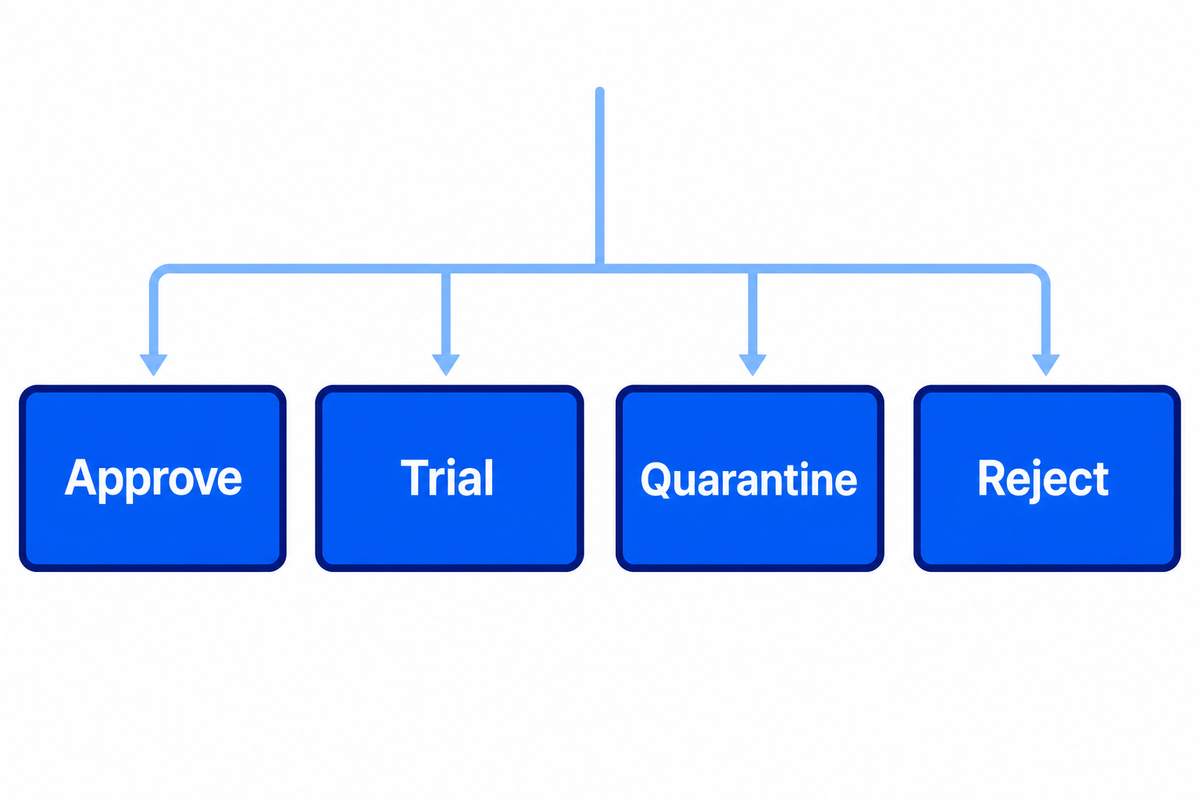
An incomplete file does not become an approval by default; assign one of four explicit dispositions instead. They are procurement decisions defined for this article, rather than an industry classification issued by an outside body.
| Disposition | Evidence state | Next action |
|---|---|---|
| Approve | Controlled identity, accepted evidence and applicable prior qualification | Release under the approved conditions |
| Trial | Complete identity, but grade, lot, source or change is not qualified | Run the risk-based controlled plan |
| Quarantine | Missing, contradictory or unrepresentative traceability | Resolve evidence before production use |
| Reject | Unauthorized substitution, contamination or failed agreed criterion | Segregate and follow the supplier/nonconformance route |
The approval should specify the boundaries of a supplier, grade, source, lot rule, intended cartridge, operating window, and the allowable scope of use. When a change falls beyond those boundaries, send it back to trial or review; it cannot inherit the earlier decision.
Best use: place the disposition on the Passport and reference the supporting file. Procurement can then see whether the order is approved, trial-only, quarantined, or rejected without interpreting technical email threads.
Frequently asked questions
What MFI is best for a melt-blown filter cartridge?
Answer
There’s no responsible universal number for every cartridge, die and operating window. Compare values only when method, condition, procedure, apparatus and laboratory basis are compatible, then qualify the named grade on the intended line and geometry. Preserve the supplier, lot, sample identity, full operating record and observed result; if several conversion variables changed, record a combined-condition trial instead of assigning the outcome to MFI alone.
Can recycled polypropylene be used for melt-blown cartridges?
Answer
This is a product- and market-specific qualification decision, not a generic yes or no; review feedstock provenance, collection route, source control, cleaning evidence, contaminants and NIAS, additive and prior-processing history, segregation, lot consistency, intended exposure, and any applicable migration or regulated component-effects route. Define representative sampling and change triggers before the trial. A complete supplier file, characterization report and successful line run don’t by themselves prove chemical suitability, cartridge performance or a regulated-use claim.
What should be listed on a PP resin CoA?
Answer
Connect the certificate to the supplier, product designation, grade and lot, then list the agreed results with their methods, conditions, units and sampling basis. Include agreed additive, stabilization, storage or processing-history declarations when relevant, and record the laboratory or apparatus basis when comparison depends on it. A template doesn’t replace the quality agreement, change notice or evidence that the tested sample represents the delivered lot.
Does passing a factory trial prove filtration performance?
Answer
No. A witnessed trial verifies agreed machine functions and recorded production conditions. Cartridge efficiency, pressure drop, capacity, compatibility, chemical release, and regulated-use claims require separate qualification.
Turn the resin file into a line-acceptance plan
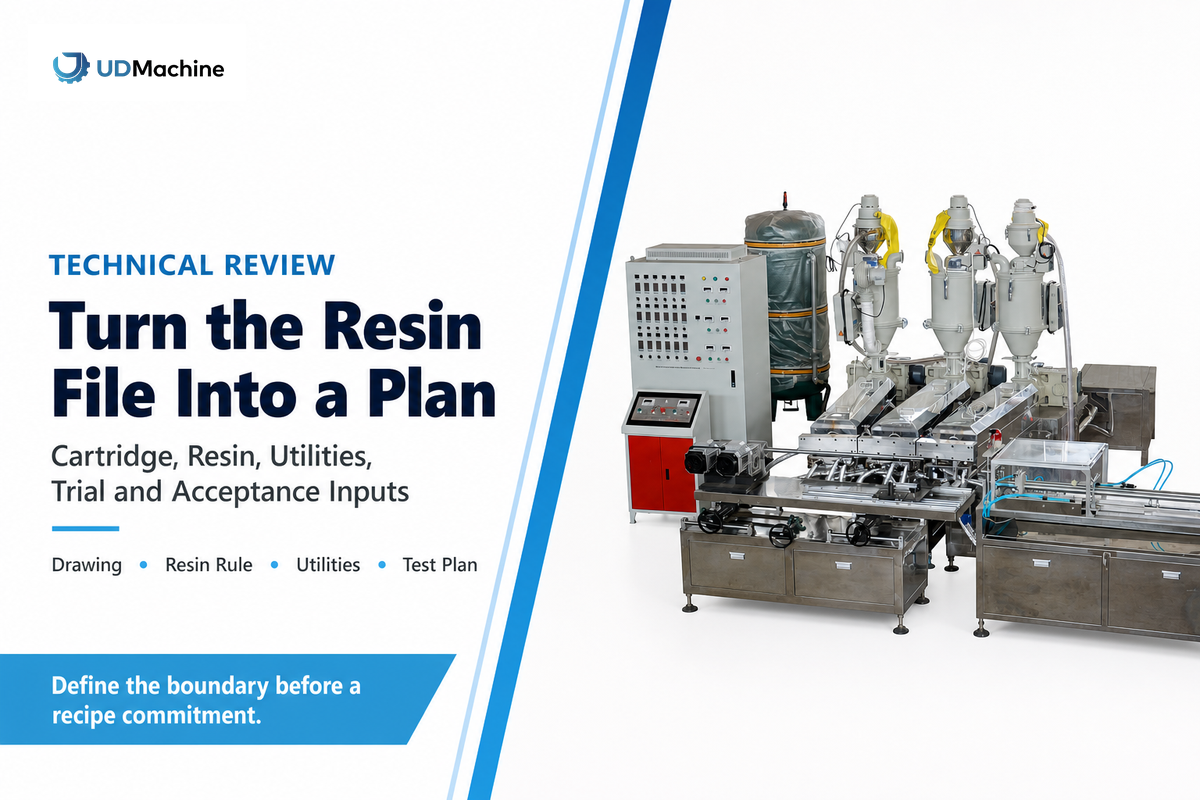
Send UDTECH the target cartridge drawing, approved resin rule, lot and sampling plan, required utilities, intended trial quantity, and acceptance responsibilities. The technical team can review which items belong to line configuration and which remain finished-product qualification work.
About UDTECH
Suzhou UDTECH Technology Co., Ltd. manufactures PP melt-blown, CTO activated-carbon, and wire-wound filter production equipment. The company reports a 6,000-square-meter standardized workshop, ISO 9001:2015 and EU CE certification, independent R&D and testing resources, and equipment exports to more than 55 countries; project performance and compliance still require the agreed machine and finished-product evidence.
References & Sources
- ASTM D1238-26 melt flow rates by extrusion plastometer
- ASTM D5857-17(2024) polypropylene material classification and selection boundary
- ASTM D3895-19 oxidative-induction time scope and interpretation
- ISO 5677:2023 recycled PP and PE pellet characterization
- 21 CFR 177.1520 olefin polymers
- NSF/ANSI/CAN 61 scope contaminants or impurities imparted to drinking water
- NSF/ANSI 42, 53 and 401 overview system and claim routing
- FDA recycled plastics guidance page source control, cleaning and intended-use evidence
- Advances in Melt Blowing Process Simulations coupled material and process variables
- Molecular Pathways for Polymer Degradation processing-related PP changes
- Comparative Extractables Study of Filter Cartridges scoped chemical-release evidence
- Post-consumer polyolefin IAS and NIAS study recycled-feedstock screening context