Get in touch with Suzhou UDTECH Technology Co., Ltd. Company

Updated September 2026
Filter Cartridge Production Line Is a Route-Specific Manufacturing System: Quick Specs
| Published output fields | 3,500–4,200 and 5,000–5,800 pcs/24h |
| Connected power fields | 70KW and 100KW |
| Published running fields | 28–32KW/H and 38–40KW/H, retained exactly as labeled by the source |
| Cartridge geometry | 28 mm standard inner diameter; 10–150 mm with matched mandrel; 38–120 mm outer diameter |
| Published product window | 1–100 μm, 10/20/30/40 in, and 70–200 g |
These fields describe a public model page. Runtime, uptime, rejects, changeover handling, and downstream station coverage still need a witnessed test plan.
Treat a filter cartridge production line as a controlled manufacturing system rather than a machine list. Analyze it from a finished cartridge backward to establish process settings, test results, conditions, and accountability for discrepancies.
Filter Cartridge Production Line selection starts with route fit, shared-basis capacity evidence, safe site commissioning, and finished-cartridge tests. Model numbers alone prove none of those outcomes.
Key Points
- A clean witnessed run can challenge a nameplate claim, but it doesn’t prove stable long-run capability.
- Material compliance, machine acceptance, workplace safeguards, and finished-cartridge performance need different records.
- High mix or low volume doesn’t automatically rule out reconfigurable automation.
- Payment risk is more controllable when the contract names the test, record, hold point, and response to failure.
What Should a Filter Cartridge Production Line Prove Before You Buy?
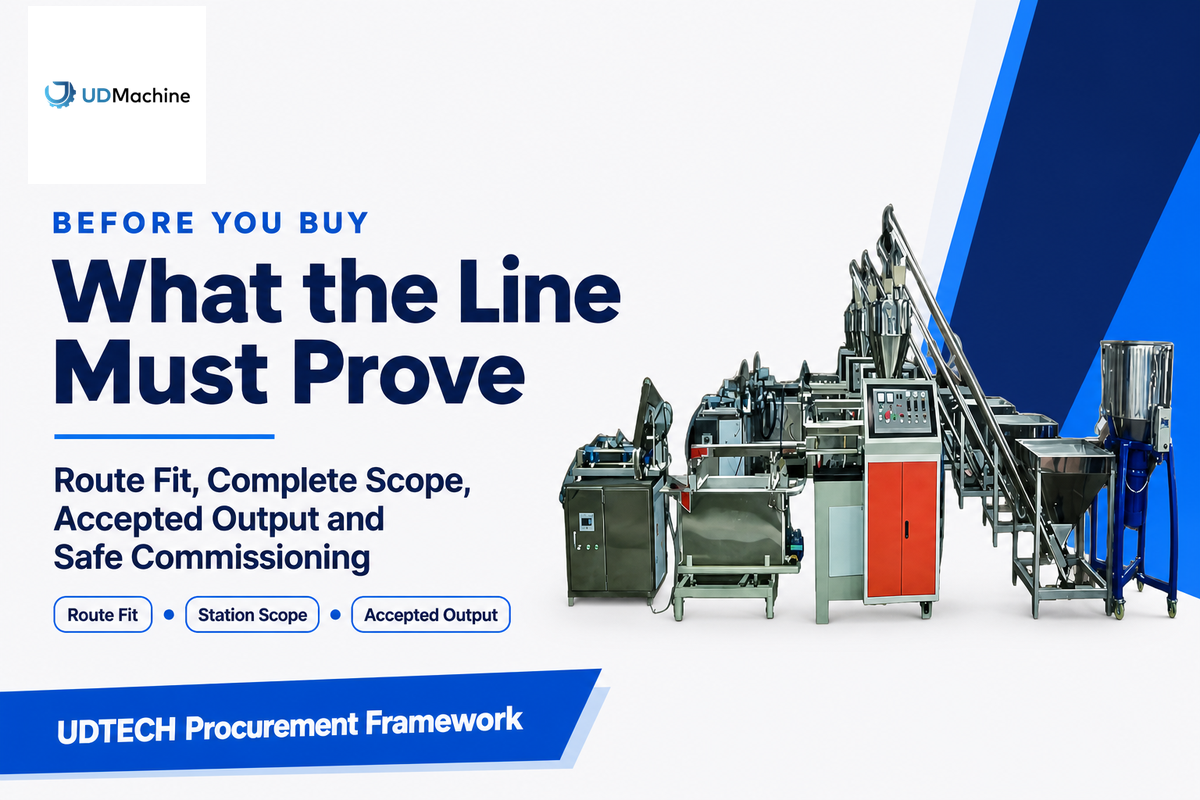
Before commitment, a filter cartridge production-line purchase case should prove five things. First, the line fits the specified cartridge route. Second, its quoted scope includes every required production station. Third, it can produce accepted-good output under stated conditions. Fourth, the installed system can be commissioned safely at the buyer’s site. Fifth, representative cartridges pass the agreed product test. One supplier brochure seldom proves all five.
Machines form shapes; buyers sell cartridges for applications. Material, end format, joining, testing, and downstream scope sit between them. Define those boundaries before comparing quotations, then verify them again during factory and site acceptance.
For a commercial configuration, use UDTECH’s filter cartridge production line page. This guide remains on the evidence layer and refrains from replicating its quotation tools.
The published 5,800 pcs/24h ceiling for one PP model family is not shown to apply to every length, 70–200 g weight, end format, or finishing limit. The witnessed production condition should be bought; the upper published limit shouldn’t be.
Start With the Finished-Cartridge Acceptance Specification
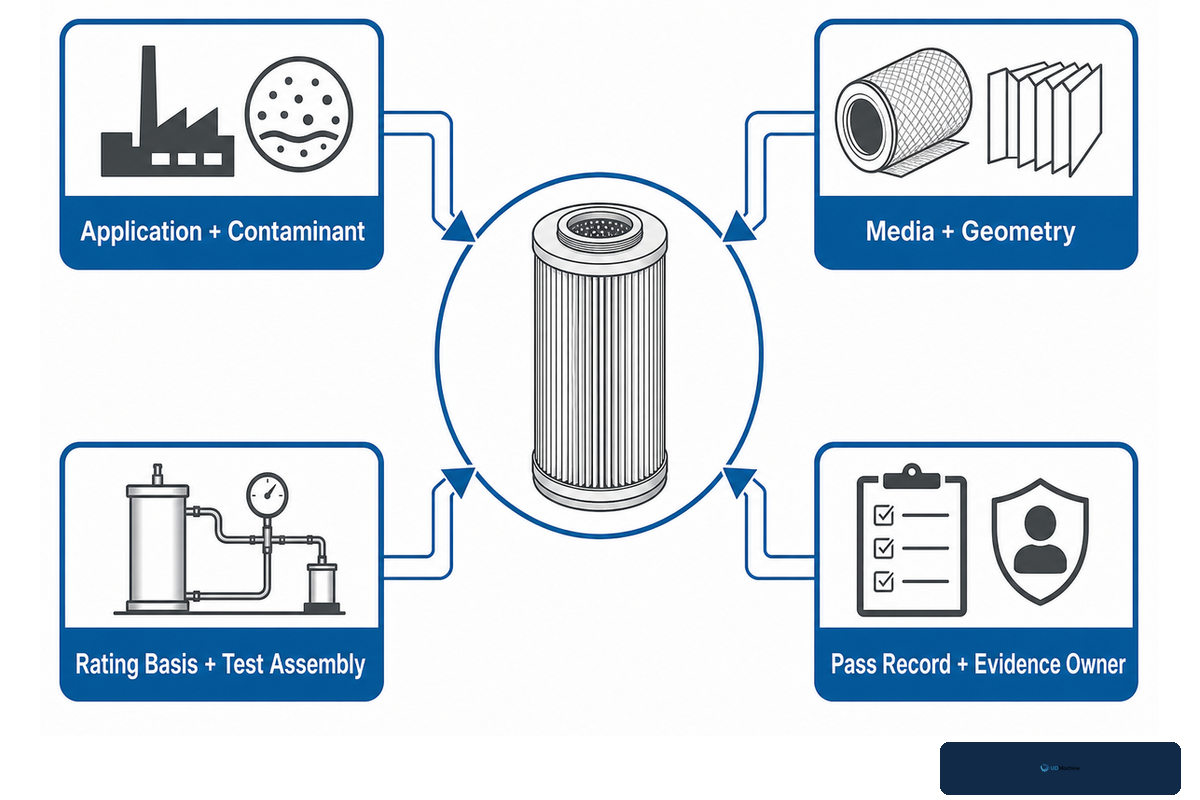
Before a machine is chosen, the finished-cartridge acceptance specification should provide the application, contaminant, media, geometry, end format, rating basis, test assembly, pass record, and evidence owner. The label “10-inch, 5-micron cartridge” will leave too much ambiguous for comparing proposals and approving samples.
An individual micron figure becomes operable only in concert with a testing method. An industry explainer describes historical nominal and absolute conventions using 85% and 99.9% rejection, mentioning that the methods didn’t unify the industry. Those percentages aren’t universal acceptance limits.
| Requirement | Why it changes the line | Evidence to request | Limitations / Not suitable for |
|---|---|---|---|
| Application stream | Sets compatibility and cleanliness questions | Named fluid, temperature, duty, and applicable requirement | A generic “liquid filtration” label cannot set proof |
| Contaminant and removal claim | Changes media structure and test method | Particle or substance, challenge condition, claimed result | Micron alone does not state efficiency |
| Media or resin | Determines forming route and process window | Material designation, supplier record, lot identity | A family name cannot prove food-contact or service suitability |
| Inner and outer diameter | Sets mandrel, bore tool, die, cage, or core | Drawing, tolerance, gauge, and calibration status | One tool cannot be assumed to cover every diameter |
| Length and mass | Changes cycle, cut, material use, and pieces per shift | Finished length, mass window, sample record | Pieces per day is invalid without this basis |
| End format and seal | Adds trimming, adapter, end-cap, or joining stations | End drawing, weld method, visual and functional result | A double-open-end former does not prove capped output |
| Rating basis | Controls how “nominal,” “absolute,” or beta claims are read | Exact claim language and method reference | Terminology cannot replace a test result |
| Test assembly and flow | Changes the measured response | Housing, fluid, flow, temperature, challenge, instrument | A result cannot travel to another assembly by assumption |
| Acceptance and retention | Controls sample release and future dispute evidence | Pass rule, sample ID, raw readings, sign-off, storage period | An unsigned “pass” certificate is not traceable proof |
Define the regulated object and the market (i.e., pharmaceutical, beverage, food-contact, or drinking-water use) for each. Rules for resins, standards for systems, and declarations for machines address distinct objects, so evidence stays within its stated scope. Evidence can’t freely move between the three.
A 5 μm, 10 in code does not define a test. ISO 16889:2022 covers hydraulic filter elements under stated multi-pass conditions; a water-cartridge buyer needs an application-matched method, assembly, and pass rule.
How PP, String-Wound, Carbon-Block, and Pleated Filter Cartridge Production Routes Differ
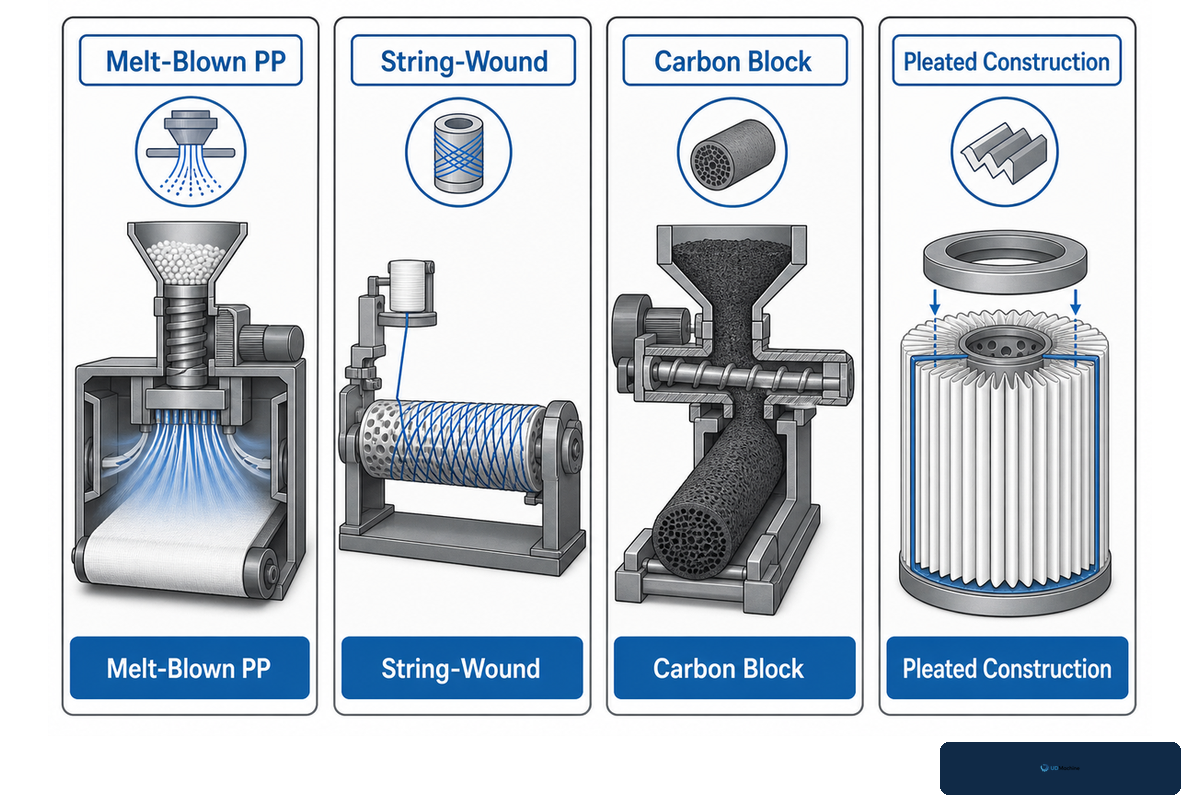
Four common routes of cartridge use different line functions. Melt blown PP is a distinct equipment family; string-wound uses yarn tension and traverse; carbon block uses compaction or extrusion tooling; and pleated construction uses fold geometry, seams, and end joining. Their controls, stations, and failure evidence can’t be substituted. Those method and assembly choices have narrowed the routes; a 28 mm bore still requires route-matched tooling.
For a pleated filter cartridge, the pleating machine sets filter membrane geometry, but the broader pleated cartridge filter production process still extends through media folding, seam control, ultrasonic welding or another validated joining method, and inspection. In filter manufacturing, comparing filter cartridge manufacturing equipment means fixing the route, the selected adhesive or weld method, and every handoff. A filter cartridge machine is a single boundary in filter making; a published 28 mm bore remains a configuration field, and water filter acceptance is an application-specific problem.
Route labels must be specific. Output from a PP melt blown filter cartridge machine isn’t a sediment filter by default; pleated cartridges aren’t a single geometry, so a high-flow label needs the filter paper, pleated media, surface area, and drawing before it proves anything.
| Operation | Mechanism | Control | Next station | Record | Boundary |
|---|---|---|---|---|---|
| PP feed | Molten polymer supply | Lot, feed condition | Extrusion | Lot, recipe | Not wound/carbon |
| PP fiber forming | Fibers collect on mandrel | Heat, air, flow, take-up | Cool, cut | Recipe, mass, dimensions | Not filtration proof |
| PP trimming | Finishes length and face | Cut, blade | End finish | Length, face | No cap/adapter |
| String winding | Yarn crosses a core | Tension, traverse, overlap | Cut, finish | Pattern, mass, sample | Core compatibility fixed |
| Carbon mixing | Distributes carbon/binder | Material, batch | Feed, form | Batch, mix | Not adsorption proof |
| Carbon extrusion | Forms bore/body | Die, tool, compaction, heat | Cut/cure | Tool, dimensions, integrity | Another bore needs tooling |
| Pleating | Media is folded | Height, count, spacing, tension | Cut, seam, assembly | Geometry, media lot | Supply not asserted |
| Pleated seam | Joins media pack | Overlap, heat, weld | Cage, cap | Seam, sample | Appearance may miss leaks |
| End-cap joining | Bonds body/end | Alignment, energy, time, pressure | Cool, inspect | Recipe, sample, result | Material pairs differ |
| Finished inspection | Tests assembly | Method, challenge, instrument | Release, pack | Readings, decision, sample | Settings are not product proof |
Use route pages to identify each equipment family: PP melt-blown, string-wound, or CTO carbon-block. The broader machine-family page shows commercial categories.
Output from a string wound filter cartridge machine and a PP element can share a 20 in length but not forming controls. Patent evidence ties wound retention to yarn quantity, tension, traverse, and filament structure.
Turn the Product Brief Into Station-Level Requirements
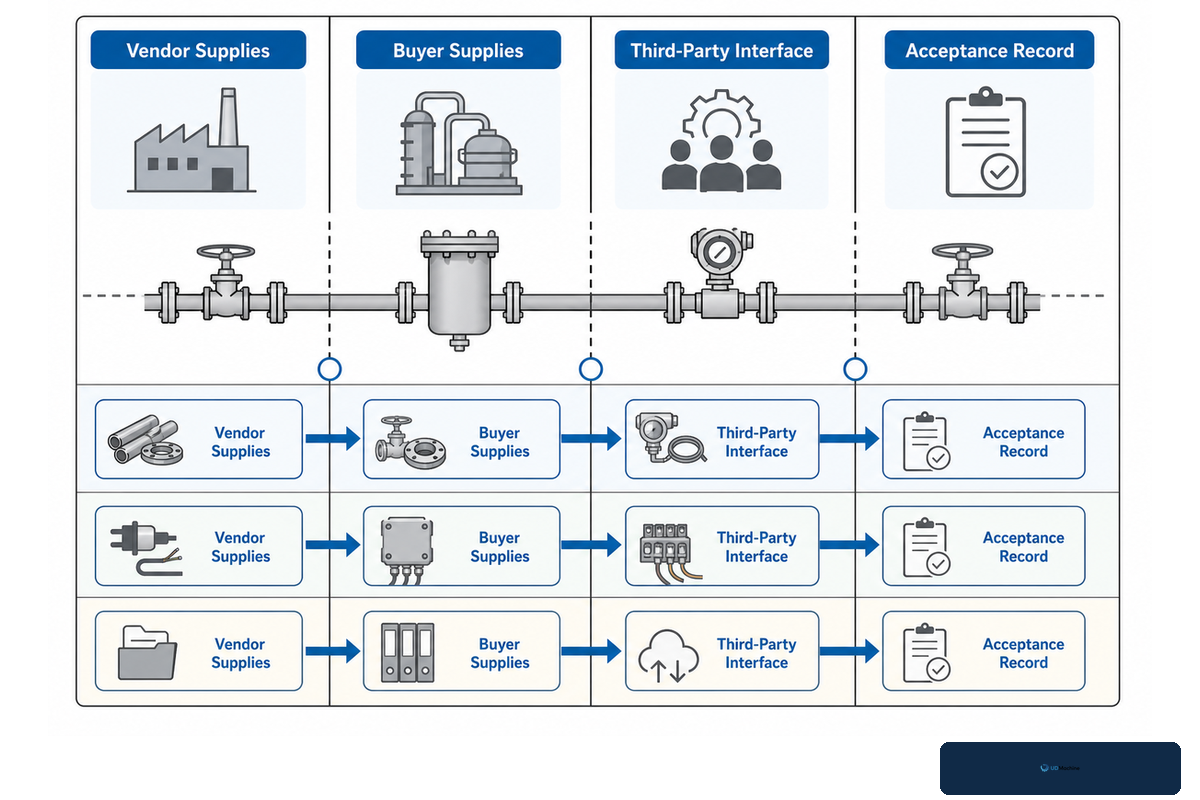
Station-level requirements convert each finished-cartridge need into an upstream input, forming operation, downstream operation, inspection point, utility interface, and responsible party. OEM quotations labeled “complete line” remain incomplete until the vendor, buyer, and third-party boundaries are visible for every operation needed to release the intended cartridge. These route controls become station-level inputs prior to any supplier boundary being accepted.
Work backwards from the saleable unit. Capped cartridges need cap joining; an outer cage needs supply, cut, fit, and assembly boundaries. Cameras need defect classes, lighting, samples, false-reject handling, and retrievable records.
Describe how an assembly line differs from a single welder. Depending on the materials and validation plan, end-cap joining may use hot-melt, ultrasonic, or infrared welding. The inner core, filter sizes, and the longer cartridge option each require their own tools, checks, and change control.
For acceptance, treat hot-melt, ultrasonic, and infrared joining as material- and method-specific until the intended material pair is validated.
| Operation | Vendor supplies | Buyer supplies | Third-party interface | Acceptance record |
|---|---|---|---|---|
| Raw-material feed | Feeder and controls if quoted | Approved material and lot record | Material supplier documents | Lot-to-recipe trace |
| Forming | Machine, tooling, controller | Target product and trial material | Utility connection | Recipe, sample ID, raw readings |
| Cut and trim | Included station and guard | Length tolerance | Blade or tool supplier | Length and face record |
| End finishing | Named welding machine if included | Cap and adapter specification | Component supplier | Weld recipe and result |
| Product inspection | Sensor or fixture in scope | Defect and pass definitions | Lab or calibration service | Raw result and decision |
| Utilities and exhaust | Machine-side connection data | Plant capacity and installation | Licensed local contractor where required | As-built check and site test |
| Controller and recipe handover | Program baseline and access method | Account owner, backup location, recovery test | Network or security approval | Backup hash, version, patch owner, recovery record |
If the former makes a double-open-end element but the sales drawing shows a single-open-end assembly, the unpriced gap, not necessarily the quotation, is the problem. Assign the incomplete work prior to considering the total price.
The assembly and finishing section of UDTECH identifies separate joining operations; confirm each included station in the quotation.
The Spec-to-Sample Loop
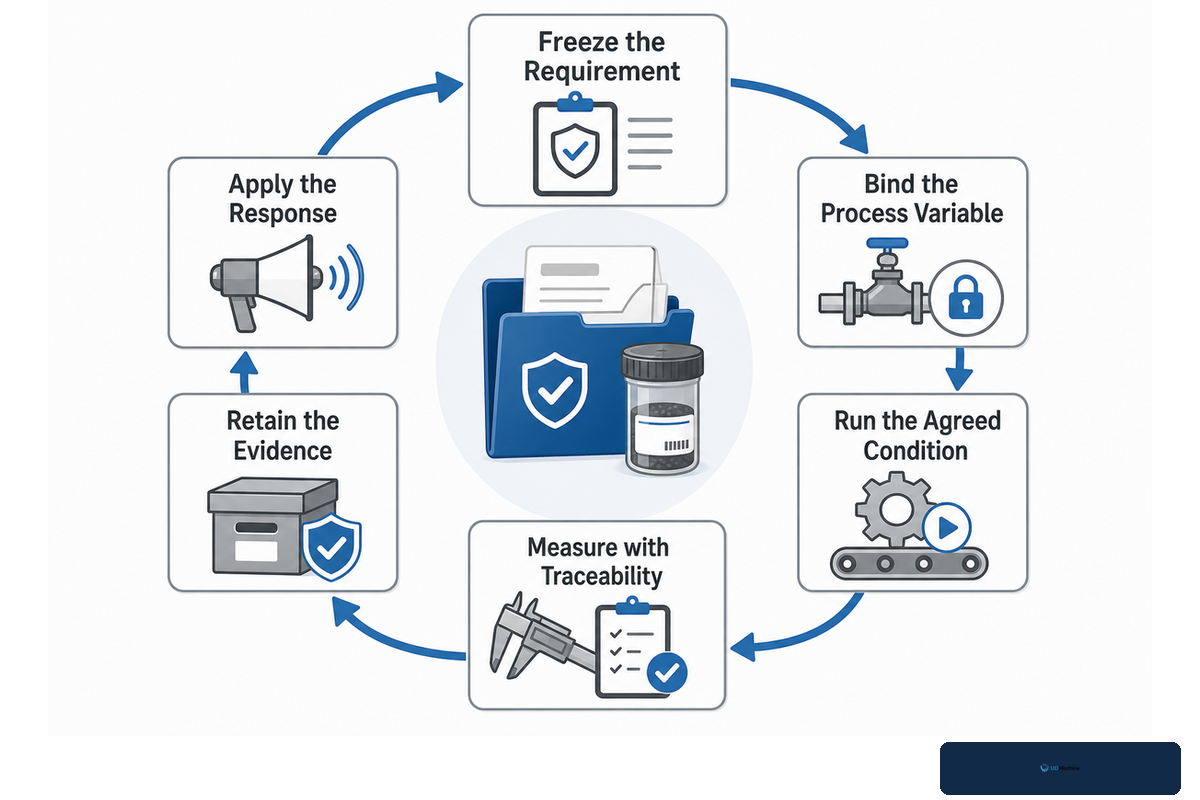
The Spec-to-Sample Loop is a six-link control method that documents each product requirement through process settings, trials, measurements, retained records, deviations, and commercial actions. Those quoted joining operations define the loop’s station boundaries.
Signing alone doesn’t connect a sample to the agreed material, recipe, gauge, or counted production period. The loop makes those handoffs traceable before the trial.
- Freeze the requirement: name the product value, tolerance, method, and application boundary.
- Bind the process variable: identify the recipe, tool, material lot, station, and owner that can change the result.
- Run the agreed condition: use the stated setup, exclusions, duration, and sampling rule.
- Measure with traceability: record instrument identity, resolution, calibration status, operator, and raw reading.
- Retain the evidence: keep sample IDs, photos where useful, data, signatures, and approved deviations.
- Apply the response: follow the agreed rerun, correction, concession, hold, or payment action.
If a sample passes the diameter test but doesn’t include the resin lot and the startup condition, the buyer’s quality plan should not release it on that evidence alone. Mark the requirement open and request a controlled rerun. Don’t make a capability determination without evidence.
Record the deviation, affected sample, approver, expiry, and commercial impact whenever a temporary result falls outside the drawing. A casual “acceptable” email does not create the control needed to move the system into commissioning.
For the published window, a trial sheet may record a 28 mm bore, a 10–150 mm matched-mandrel range, a 38–120 mm outside-diameter range, a 1–100 μm rating range, 380 V at 50 Hz supply, and a 70 kW or 100 kW connected field. These are configuration inputs, not performance proof.
Compare Filter Cartridge Production Capacity With a Same-Basis Trial
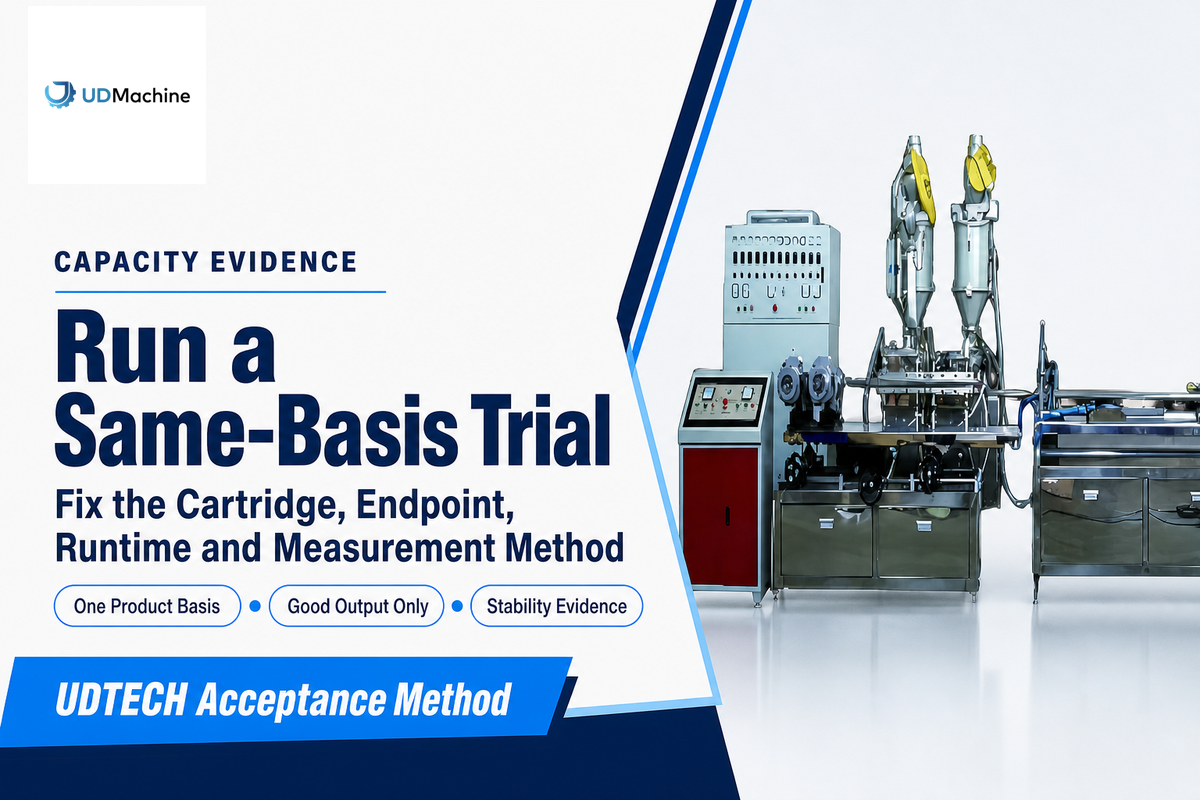
One trial run on a controlled basis can show whether a line produces conforming cartridges under those conditions, and it can discredit an incompatible nameplate claim. Sustained capacity requires more evidence: stable behavior over an agreed period, independent samples, an appropriate measurement system, and clear criteria for treating startup, downtime, rejects, changeovers, and tool wear. The trial sheet defines the controlled basis for that first run.
“We cannot begin to talk about process capability until we have demonstrated stability in our process.”
The first-party page lists 3,500–4,200 pcs/24h for 2E&2M and 5,000–5,800 pcs/24h for 3E&3M, with 70KW/100KW connected and 28–32KW/H/38–40KW/H running fields. Runtime, uptime, rejects, and changeover handling aren’t reported; geometry and mass windows are reported but not mapped to each output, so these values remain attributed and unadjusted.
A same-basis worksheet could, for example, freeze a 10 in length, 28 mm bore, 70 g finished mass, 380 V supply at 50 Hz, and a 60 min witnessed window. Those values aren’t defaults: the signed order must replace every example with the exact cartridge, site, and test condition being purchased.
| Field | Initial witnessed trial | Stability evidence | Invalid comparison when |
|---|---|---|---|
| Cartridge definition | Fix route, media, length, diameter, mass, end format | Repeat the agreed family or stratify variants | Products differ |
| Material and lot | Record supplier, grade, and lot | Include agreed lot variation | One side uses easier material |
| Station boundary | Name forming, cutting, joining, inspection, packing | Track the same good-output endpoint | One claim stops earlier |
| Run duration | State clock start and stop | Cover an agreed operating period | Daily output is extrapolated from an unstated interval |
| Startup exclusion | Define warm-up and setup pieces | Track startup loss by run | One result hides startup scrap |
| Downtime and uptime | Record reason and clock time | Classify planned and unplanned loss | Rates use different denominators |
| Reject rule | Count good, rejected, reworked, and untested pieces | Trend defect class and disposition | Gross pieces are compared with good pieces |
| Changeover | Include or exclude by written rule | Measure across the intended product mix | One claim assumes a single recipe |
| Measurement system | Record gauge, resolution, calibration, operator, setup | Study repeatability, reproducibility, bias, drift, and configuration effects as appropriate | Measurement error can mask process variation |
| Stability and tool wear | Observe the stated trial only | Use independent samples over the agreed horizon and include wear states | One short run is labeled sustained capability |
NIST’s gauge-study overview covers repeatability, reproducibility, stability, bias, resolution, operators, and configuration. It describes why each acceptance instrument requires an agreed-upon adequacy check. It doesn’t provide a universal study design for every plant.
When fixtures and/or resolutions differ, vendor and customer readings may vary. Freeze the class of instrument, fixture, method, operator rule, calibration status, and rounding before either party views the results.
The same-basis trial may challenge a “24-hour” claim, but its extrapolated rate remains preliminary evidence. Sustained acceptance also requires stability and independent samples, adequate measurement evidence, and loss provisions.
Factory Acceptance, Site Acceptance, and Finished-Cartridge Validation Are Different Proofs
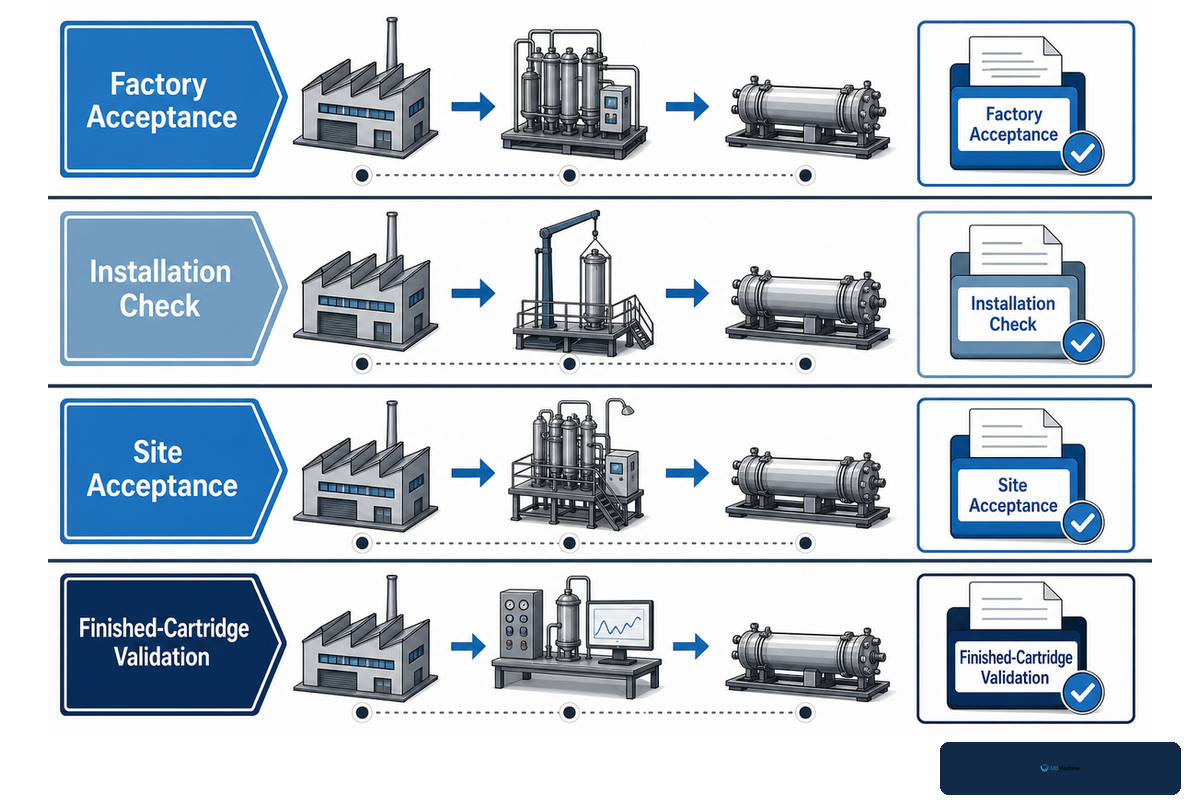
Factory acceptance testing, site acceptance testing, and finished-cartridge validation answer different questions. Factory testing observes the supplier’s package under stated conditions. Site testing observes installed interfaces and safeguards. Product validation tests the cartridge against its application method. Passing one layer does not transfer the same result to the other two. Stability and measurement limits keep factory evidence separate from site proof.
What Does a Passed Factory Acceptance Test Not Prove?
Passing factory acceptance testing doesn’t confirm site readiness for utilities, ventilation, networking, feeding, packing, procedures, or market-specific cartridge claims. Each layer requires its own owner and record. It also cannot prove installed safeguards, servicing isolation, or finished-cartridge performance under the buyer’s application method.
| Proof layer | Location / owner | Inputs | Pass record | What it cannot prove | Failure action |
|---|---|---|---|---|---|
| Design review | Shared | Approved drawings and boundary | Signed revision | Built performance | Correct and reapprove |
| Factory acceptance | Supplier site / shared witness | Agreed material, recipe, method | Raw data, issue log, certificate | Installed utilities and buyer procedures | Correct, rerun, or document deviation |
| Installation check | Buyer site / installation owner | As-built utilities and interfaces | As-built checklist | Loaded process performance | Fix interface before run |
| Site acceptance | Buyer site / shared witness | Installed line and agreed product | Site readings and exceptions | Every future lot or application claim | Correct and rerun affected test |
| Normal-operation guarding | Installed workplace / employer | Hazard assessment and operating mode | Guard and interlock test | Servicing isolation | Stop use and correct safeguard |
| Servicing energy isolation | Installed workplace / employer | Cleaning, setup, jam clearing, maintenance states | Procedure, device, verification, training record | Finished-product performance | Isolate, revise procedure, retrain |
| Finished-cartridge validation | Qualified lab or defined plant setup / quality | Representative cartridge and method | Raw test result and disposition | Machine safety or future process stability | Investigate product and process |
| Training and handover | Buyer site / named owner | Manuals, recipes, backups, spare list | Competency and recovery record | Safe behavior after later changes | Close gaps before final handover |
Within its United States workplace scope, OSHA 1910.147 addresses hazardous energy during servicing. Guarding for normal production and servicing isolation are two separate actions; other jurisdictions require their own standards and competent assessment.
Factory jam-clearing habits don’t transfer to a site procedure. Observe cleaning, setup, unjamming, and maintenance separately; identify energy sources and validate site procedures before handover.
A factory test at 380V/50Hz can confirm the agreed supplier setup, but not site wiring, guarding, servicing, training, or cartridge results and claims. Each requires an owner, record, exception path, and applicable jurisdiction.
Which Standards Attach to the Machine, Filter Media, and Finished Cartridge?
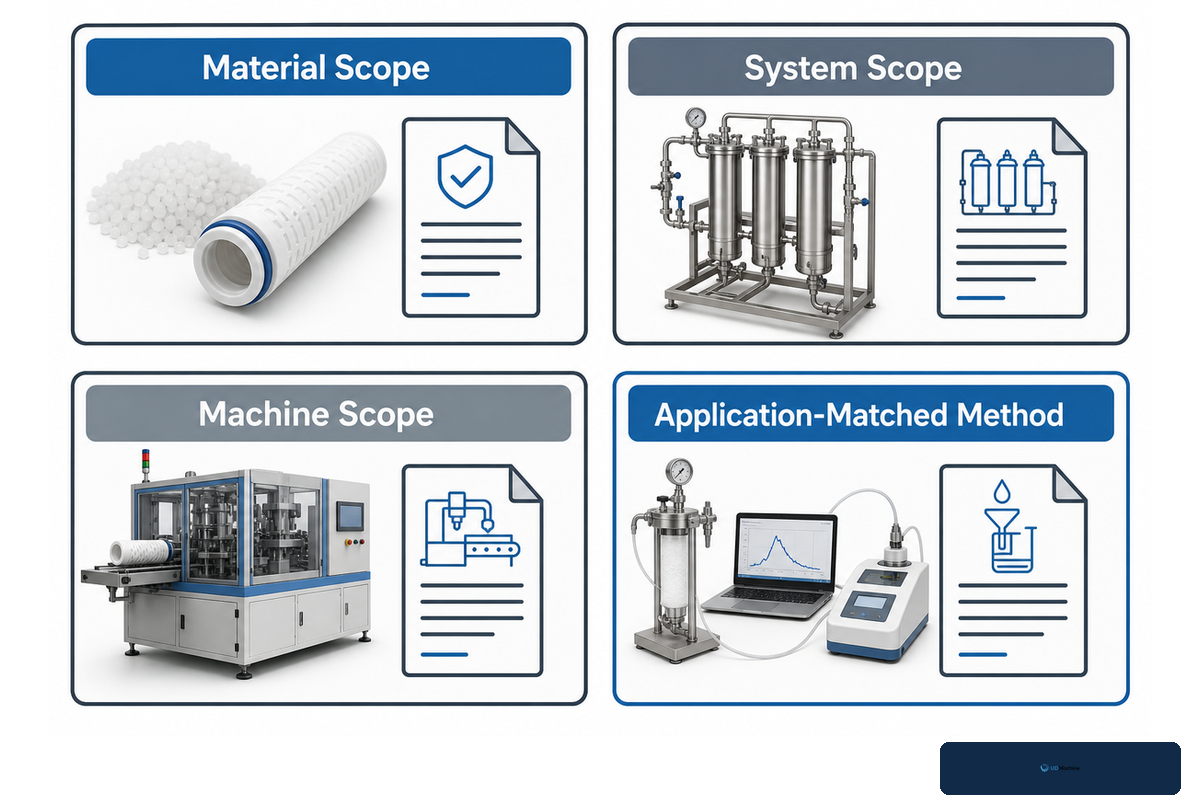
Regulatory citations only become useful after the buyer provides identifying information, including the tested object, the intended application, the test assembly, the method conditions, the edition, the claimed result, and the jurisdiction. These criteria belong to separate evidence scopes: material compliance, claims on finished filtration systems, tests of hydraulic elements, machinery acceptance, and workplace rules. A certification logo does not automatically cross those evidence boundaries.
| Reference | Object / scope | Evidence to request | Out-of-scope warning |
|---|---|---|---|
| 21 CFR 177.1520 | Qualifying olefin polymers under stated conditions | Material identity and applicable supplier evidence | Does not certify a line or every finished cartridge |
| NSF/ANSI 42 | Drinking-water treatment system aesthetic effects | Listing scope and exact claim | A component or machine claim is not the same object |
| NSF/ANSI 53 | Drinking-water treatment system health-effect claims | Current listing, model, reduction claim, conditions | Does not create a universal micron test |
| ISO 16889:2022 | Hydraulic-fluid-power filter element multi-pass method | Method edition, test assembly, raw result | Not a universal test for water cartridges |
| Machine electrical and guarding rules | Installed machinery and control system | Applicable jurisdiction, design file, inspection | A foreign declaration may not close local approval |
| OSHA 1910.147 | US workplace hazardous-energy control during servicing | Site procedure, devices, verification, training | Not a finished-filter performance certificate |
Material declarations and finished-system listings cover different evidence objects. After a resin lot, recipe, or line process changes, check the listing’s stated scope and applicable change-control requirements instead of assuming that earlier evidence still applies. Map each claim to the relevant evidence and change-control rule.
Material declarations, the filtration process, and product claims remain discrete for water-filter production and food processing. The same applies to filter-membrane selection, quality control, and lifespan claims. Name the object, process, and conditions for each claim.
A machine page may publish a 1–100 μm range, but that range does not select ISO 16889 or any other method. The test scope starts with the cartridge’s application, test assembly, fluid, challenge, flow, edition, and claimed result. A standard number comes after these choices and does not replace them.
Hydraulic test references must also have method-level separation. ISO 16889:2022 addresses steady-state multi-pass performance, ISO 23369:2022 addresses cyclic-flow performance, and ISO 2942:2018 addresses fabrication integrity and the first bubble point. These methods do not provide substitute evidence and the hydraulic scope of these methods does not automatically qualify them as acceptance methods for a water filter cartridge.
Build an Acceptance Proof Map Before Linking Evidence to Payment
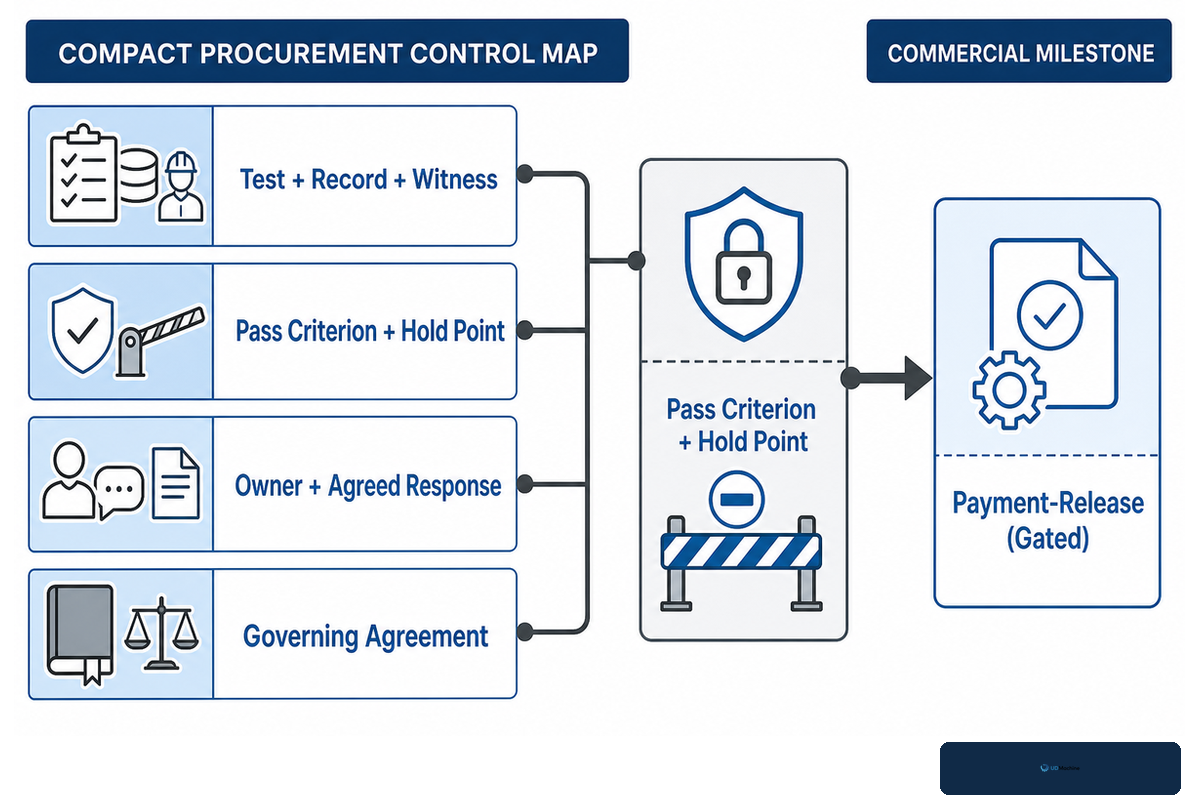
The Acceptance Proof Map provides a connection from each commercial milestone to a single test, a record, a witness, a pass criterion, a hold point, an owner, and the agreed-upon response in the absence of evidence or nonconforming evidence. That test scope is a commercial hold point when its record and response are named.
A passed certificate is of little value while omitting important information, such as the approved test revision, sample identity, raw measurements, open items, and the signer’s name. The map should be prepared by procurement prior to the release of the purchase order so the remedies can be specified both technically and commercially.
The 10-Record Acceptance Proof Map
| Milestone | Record | Owner | Pass rule | Hold point | Boundary |
|---|---|---|---|---|---|
| Requirements | Product and supply specification | Quality, procurement | Mandatory fields resolved | Design release | Not build proof |
| Design review | Drawings, interfaces, risks, revisions | Engineering | Revision approved | Fabrication lock | Not output proof |
| Components | Named material records | Supplier, quality | Specification match | Assembly | Identity may need inspection |
| Dry test | I/O, interlock, alarm, motion | Controls, safety | Test steps pass | Loaded trial | Not product proof |
| Loaded factory test | Plan, readings, samples, issues | Named witnesses | Criteria resolved | Shipment | Not site proof |
| Shipment | Packing, open items, preservation | Procurement, logistics | Contract conditions met | Dispatch | Not final acceptance |
| Installation | Utilities, alignment, exceptions | Site engineering | Readiness checks pass | Energization | Not capacity proof |
| Site acceptance | Trial, safeguards, exceptions | Buyer, supplier | Installed tests pass | Operational release | Not sustained capacity |
| Training and OT | Competency, baseline, backup, recovery | Operations, maintenance, IT/OT | System recovered | Final handover | Manual is insufficient |
| Final acceptance | Closed issues and evidence index | Authorized signers | Contract completion | Final release | Subject to applicable law and the parties’ agreement |
A public contract template from the United Kingdom includes a drafting example that includes an agreed test plan, issue log, test certificate, satisfaction certificate, and milestone payment, among others that are inter-connected. Similarly, documented surveillance and nonconformance decisions are indicated in the United States federal acquisition provisions. These examples aren’t intended to provide a general framework for a private filter machine purchase.
The governing law and agreement of the parties can determine the mechanics of inspection and payment. To illustrate, the Cornell edition of the UCC text places inspection rights within an “unless otherwise agreed” provision. The buyer should retain qualified legal and commercial reviewers to draft the map from the actual contract and review its commercial terms, rather than integrating public standard terms into an international purchase order.
When Fully Automatic Filter Cartridge Equipment Is the Wrong First Purchase
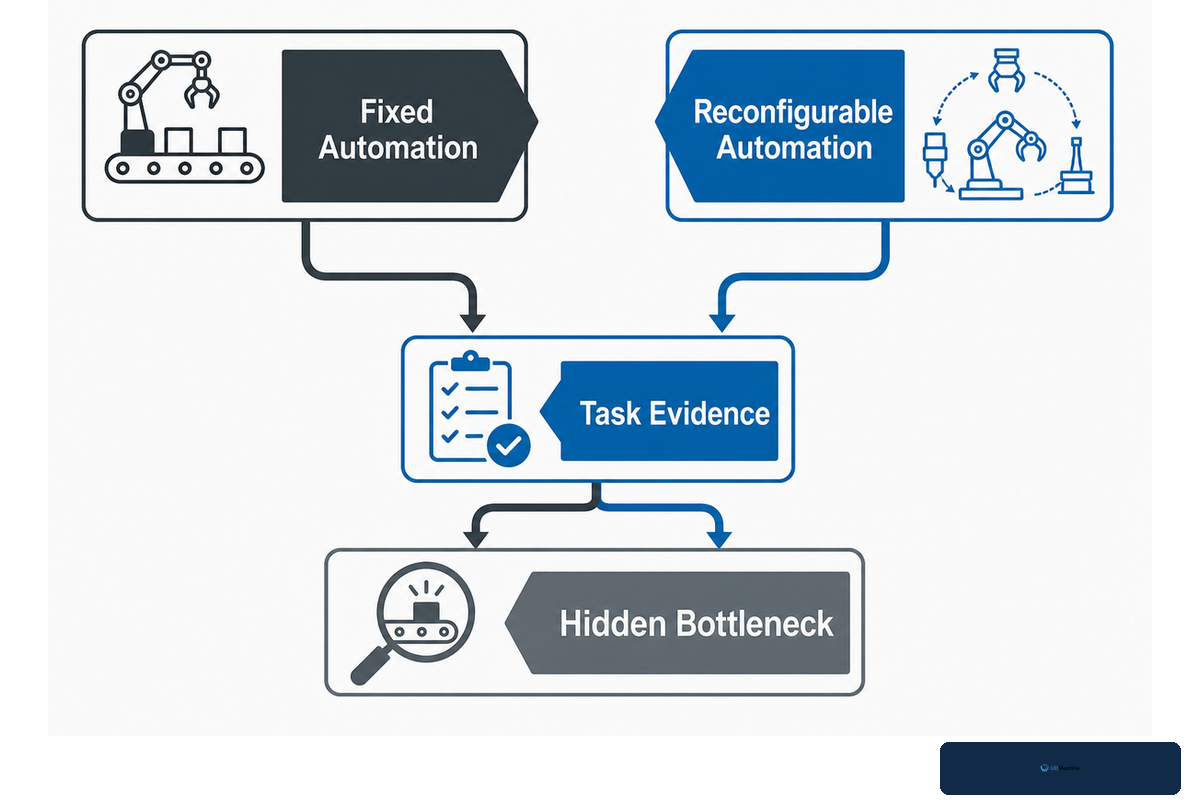
The task to be automated should govern the automation decision rather than the name of the process. After the proof map exposes the task and changeover evidence, a stable and repetitive process may suit fixed automation, whereas modular, reconfigurable, collaborative, semi-automatic, or staged automation systems may be more suitable for changing work. Volume and product mix both influence which automation system presents the lower operating risk.
Can Filter Cartridge Production Lines Be Customized Without Full Automation?
Customization may cover tooling, stations, controls, handling, inspection, and data transfer without converting every operation into a fully fixed automation process. In fact, it isn’t necessary to label the process as fixed automation; define the design from task evidence instead. Use evidence for feeding, processing, inspection, changeover, and fault recovery to select the automation design.
Performance factors in NIST’s robotic-systems framework include perception, dexterity, safety, fixturing, tooling, investment, and flexibility. Another publication by NIST focuses on reconfiguration and simpler programming for low-volume, high-mix, small-parts assembly.
| Task | Evidence | Dedicated signal | Reconfigurable signal | Hidden bottleneck |
|---|---|---|---|---|
| Feeding | Jam, refill, lot-change records | Stable presentation | Shapes change often | Recovery time |
| Tooling and bore | Tool list, change, sample | Few geometries | Frequent changes | Approval and cleaning |
| Recipe | Steps, permissions, first piece | Long campaigns | Many validated recipes | Quality release |
| Part handling | Orientation and damage trials | Repeatable datum | Flexible fixtures work | Fixture cost and access |
| Joining | Materials, recipe, samples | Stable product family | Several fixtures | Cooling and inspection |
| Inspection | Defects, method, error review | Stable defect classes | Human or lab decision | Test rate |
| Changeover | Last-good to first-good time | Rare changes | Modular setup | Approval and purge |
| Jam and maintenance | Fault, access, isolation, repair | Low intervention | Manual recovery | Recovery labor |
| Packing | Arrival pattern and rate | Matched flow | Buffer or staged upgrade | Downstream queue |
| Data and recovery | Backup, owner, fault log, test | Stable lifecycle plan | Open interfaces | Controller outage |
Common Failure Modes When Automation Depth Is Chosen Too Early
The first is constraint migration. A faster former can fill a manual trimming, welding, inspection, or packing queue while the rate of accepted goods shipped stays unchanged. The second is recovery labor: variable feeding can create stops that require skilled intervention before restart. The third is change-control debt: revisions to a recipe, fixture, vision rule, or controller need an owner and evidence. None of these outcomes proves that automation was the wrong choice. They show that the automation label was chosen before the tasks and boundaries were measured.
Do
- Measure the slowest good-output step for each product family.
- Test feeding, changeover, inspection, and fault recovery.
- Compare fixed and reconfigurable architectures on the same tasks.
- Assign recipe, backup, patch, and recovery ownership.
Don’t
- Reject automation solely because work is high mix or low volume.
- Accept “fully automatic” as a performance specification.
- Ignore manual intervention outside the quoted cycle.
- Size upstream speed without downstream good-output evidence.
A product range of 10 inches or 40 inches does not determine automation depth on its own. Evidence from the tasks will make that determination. NIST’s low-volume/high-mix work supports reconfiguration as a real direction for automation, while its performance framework keeps feeding, fixturing, perception, dexterity, safety, investment, and flexibility as part of the problem definition.
Demand Outlook: Use Orders and Utilization, Not Market Headlines
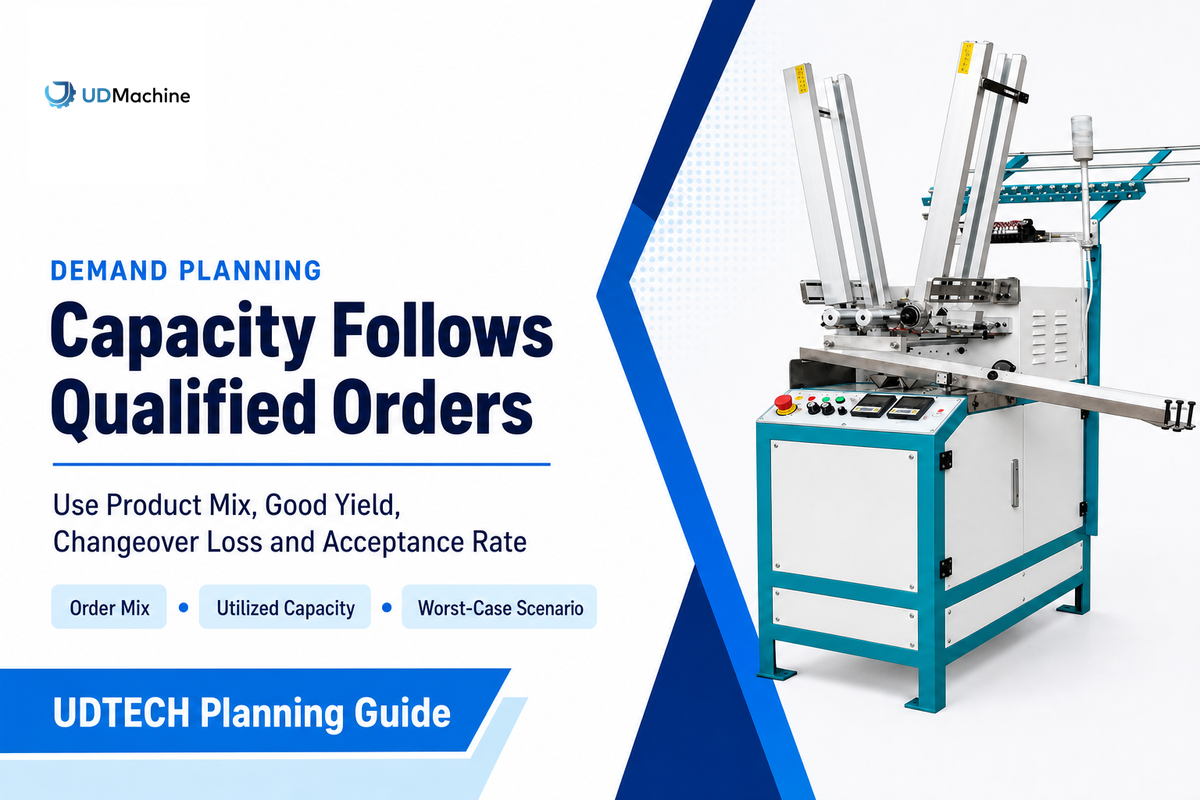
No media article headline or search-volume series used in this study provides a valid denominator for plant sizing. The 2026 equipment decision should start with qualified orders, cartridge mix, good yield, changeover loss, uptime evidence, and the acceptance rate the plant can actually sustain. Industry growth is more useful as a demand background check than as proof of the capacity this plant should buy. Media and search-volume signals alone still cannot supply the demand denominator.
High-speed, fully automated, customizable filter equipment still requires evaluation of the manufacturing process, cylindrical-component limits, manufacturing precision, and accepted-good output under the proposed conditions.
“High-quality” and “various industrial applications” don’t mean this will be accepted. They’re just descriptions.
Current-run Google Ads data did not return a usable series for the exact phrase. Among the retained equipment terms, “filter cartridge making machine” carried a search-volume field of 10; the other named production-line variants were null. The eight keywords in the different AI channel had a total search volume of 0 across the 12 months. These sparse signals can’t estimate orders or justify capacity.
A trade-publication series provides a more useful warning than a growth forecast. It shows growth in stand-alone meltblown nameplate capacity globally from 115,000 tonnes in 2019 to 273,000 tonnes in 2023 with a corresponding decline in utilization from 79.8% to 59.9%. These data cover global meltblown media rather than filter-cartridge output. This is a single-source historical series.
There may be a gap between installed and utilized capacity. Model confirmed demand by product family against observed good output, changeover loss, release delays, and a worst-case scenario. The commercial forecasts reviewed didn’t make this cut.
Filter Cartridge Production Line FAQ
What machines are used in a filter cartridge production line?
View answer
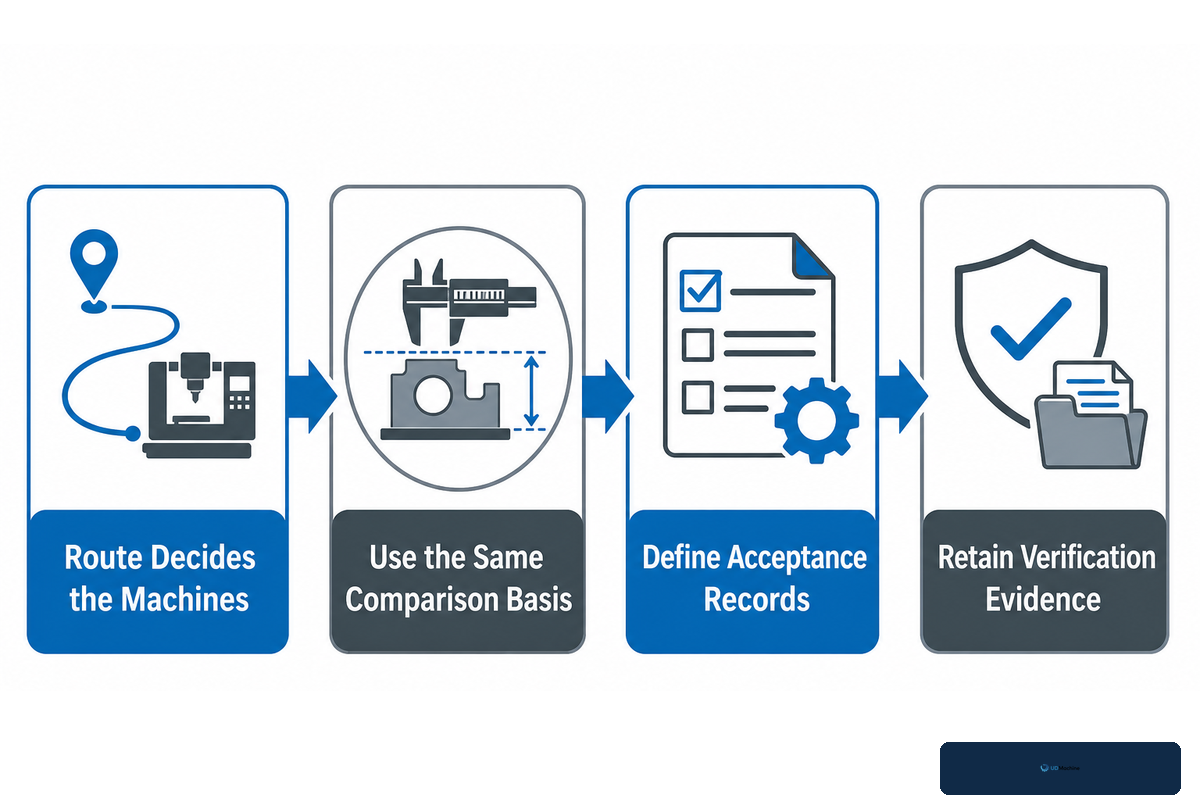
The route decides the machines. PP uses feeding, extrusion, fiber forming, collection, cooling, and cutting; string-wound uses core handling and winding; carbon block uses mixing, forming, and cutting; pleated construction adds pleating, seam, core/cage, and cap operations. Inspection and packing are separate unless quoted. Confirm every station boundary in the signed scope.
Can filter cartridge production lines be customized?
View answer
Yes. Define controlled changes to geometry, tooling, stations, handling, inspection, utilities, controls, and evidence. The proposal should name the affected family, test, and acceptance records; “customizable” alone isn’t a specification. It should also allocate utilities, safeguards, changeover limits, trial material, local approvals, and records among the supplier, buyer, and relevant third parties in the signed scope and drawings.
What technical specifications and features should a buyer compare?
View answer
Compare the cartridge, route, stations, tools, utilities, safeguards, controls, measurement, good-output basis, changeovers, rejects, service, spares, and handover. Published output and power start the discussion; accepted performance still needs a same-basis trial and site plan. Compare every field on the same exact cartridge, station boundary, run denominator, and test-method basis.
What are the benefits and limits of automated filter cartridge assembly?
View answer
Automation can improve repeatability when inputs are stable, yet shift constraints to feeding, changeover, recovery, inspection, or packing. Compare architectures at one good-output endpoint.
How can a buyer verify a filter cartridge production line manufacturer or supplier?
View answer
Verify the identified seller, manufacturing and service roles, route-specific work, drawing control, components, test capability, issue process, spares, and authorized signers. Witness your material and specification under a written plan; retain readings, sample IDs, versions, deviations, and open items. Assign every station, approval, installation task, and product test. Match certification evidence to the identified seller or manufacturer, and let qualified legal and commercial reviewers define tests, records, hold points, and remedies for the actual contract.
What should a filter cartridge production line quotation include?
View answer
For comparison, the quotation should define the cartridge family, tooling, included stations, utilities, safeguards, trial material, test conditions, acceptance records, spares, commissioning, training, third-party interfaces, buyer responsibilities, and exclusions. Compare price only after those boundaries use the same basis; otherwise a lower figure may simply omit work.
Key takeaway
A 5,800 pcs/24h field becomes useful only after the cartridge, station boundary, run basis, measurement system, stability plan, and acceptance response are agreed.
Bring Your Product and Evidence Plan to the Quotation
UDTECH can discuss route fit and line configuration against your cartridge drawing, material, output basis, finishing boundary, and trial requirements.
Editorial Transparency
Public first-party specifications are identified as such, and external standards or regulatory sources are kept within their stated application and jurisdiction.
References & Sources
- US 6,942,106, wound filter cartridge process disclosure Google Patents / USPTO data
- US 5,189,092, carbon-block process disclosure Google Patents / USPTO data
- Assessing Process Stability NIST/SEMATECH e-Handbook
- Gauge R&R Studies NIST/SEMATECH e-Handbook
- Robotics safety and site acceptance guidance Occupational Safety and Health Administration
- 29 CFR 1910.147, control of hazardous energy Occupational Safety and Health Administration
- 21 CFR 177.1520, olefin polymers Electronic Code of Federal Regulations
- NSF/ANSI 42, 53 and 401 scope overview NSF
- ISO 16889:2022 catalogue scope International Organization for Standardization
- Call Off Schedule Templates UK Government
- FAR 46.401, contract quality assurance U.S. Acquisition.gov
- FAR 46.407, nonconforming supplies or services U.S. Acquisition.gov
- UCC 2-513, buyer’s inspection right Cornell Legal Information Institute
- Performance Assessment Framework for Robotic Systems National Institute of Standards and Technology
- Robot technology for low-volume/high-mix assembly National Institute of Standards and Technology
- Stand-alone meltblown capacity utilization post-COVID Nonwovens Industry
- Absolute and nominal cartridge filter ratings Water Conditioning & Purification
- US 6,342,283, melt-blown cartridge apparatus disclosure Google Patents / USPTO data
- ISO 23369:2022 cyclic-flow test scope International Organization for Standardization
- ISO 2942:2018 fabrication-integrity test scope International Organization for Standardization