Get in touch with Suzhou UDTECH Technology Co., Ltd. Company

A melt blown filter cartridge surface finish describes the visible outer form of a polypropylene cartridge. Features such as a smooth, grooved, or textured surface may be defined by this term. This definition, however, won’t describe other characteristics such as morphology, micron rating, or wettability.
Updated September 2026
Direct answer
Specify the visible finish with an approved sample or drawing, define measurable geometry and affected length, record the forming process, and keep filtration qualification separate.
Quick specification card
- Observation scale: visible macroscopic form, not microscopic fiber or chemistry data.
- Definition control: approved sample, revisioned drawing, or both.
- Acceptance evidence: visual, dimensional, process, structural, and filtration records kept separate.
- Commercial handoff: the line quotation defines included forming tools, modules, and verification scope.
Key points before you compare finishes
- Shared names don’t guarantee shared geometry.
- More visible surface area is a hypothesis, not a performance certificate.
- Successful machine trials aren’t filtration qualifications.
- Media, element, mounting seal, and housing interface need separate ownership.
What surface finish means on a melt-blown filter cartridge
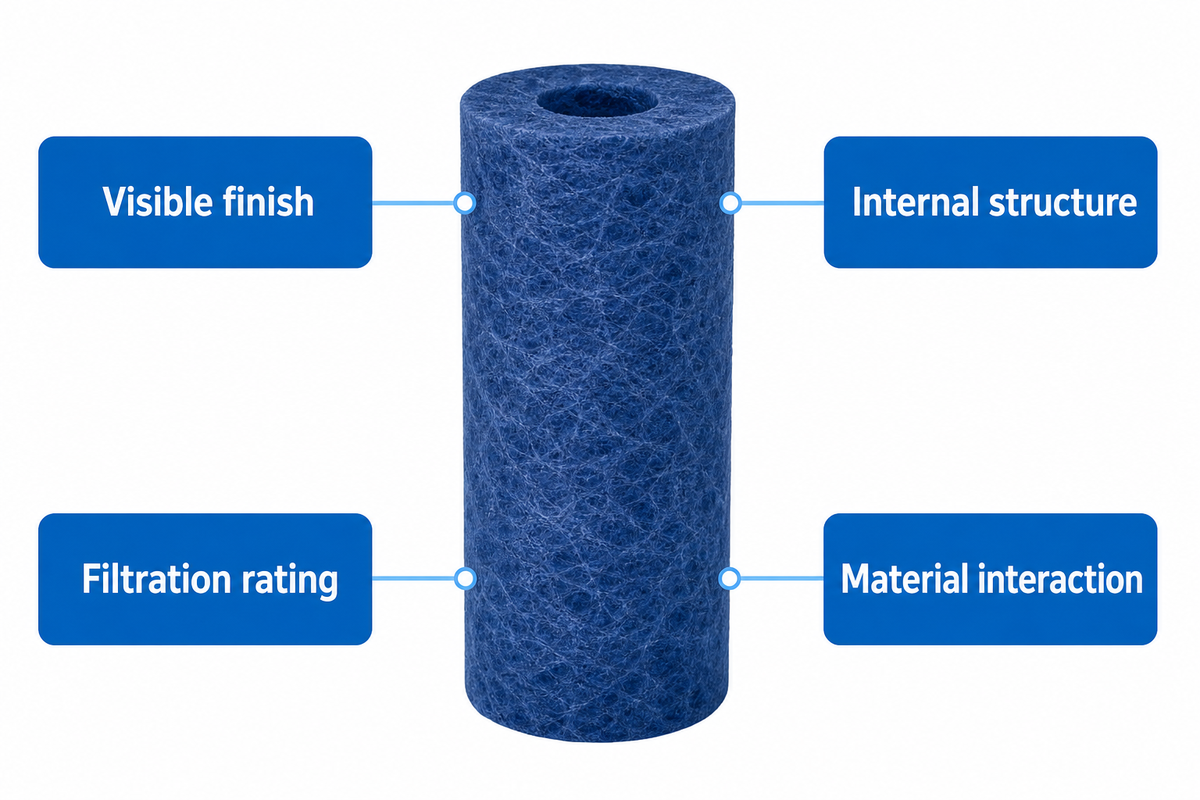
References to surface finish in this guide describe visible features of a cartridge at cartridge scale and therefore don’t define microscopic morphology, gradient structure, fine fiber formation, or graded pore structure. Features such as pore structure and wettability, however, require separate microscopic or material evidence.
The specification must include an observation scale. The name “grooved exterior” can be depicted in a drawing. “Water-wettable media” and “1 µm absolute” require evidence of the material or performance.
| Field | What it describes | Evidence to request |
|---|---|---|
| Visible finish | Smooth, grooved, patterned, fuzzy, or another agreed form | Approved sample, scaled image, drawing |
| Internal structure | Pore distribution and radial density profile | Process record and relevant test method |
| Filtration rating | Retention claim under stated conditions | Efficiency curve, challenge, flow, fluid, and report |
| Material interaction | Compatibility, adsorption, extractables, or leachables | Application-specific material and whole-element qualification |
“may be safely used as articles or components of articles intended for use in contact with food”
The rule in question relates to qualifying certain olefin polymers, and doesn’t describe the finish of a cartridge. Other evidence may describe the finish of a cartridge; e.g. the intended use of a product.
Smooth, grooved, patterned, and textured forms: build a controlled vocabulary
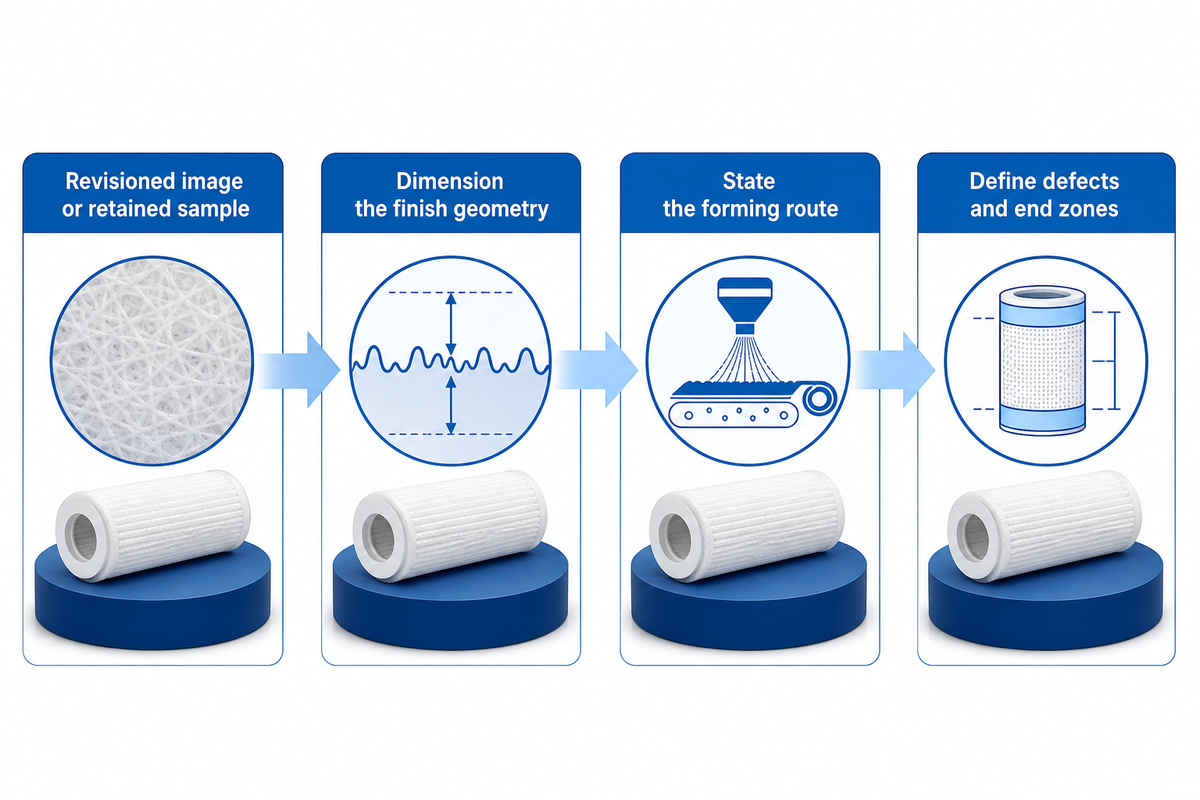
A term such as “smooth” may describe the finish of a product, but may also remain undefined, and therefore, will require evidence to support its meaning.
Do
- Attach a revisioned image or retained sample.
- Dimension pitch, width, depth, and affected length in the drawing’s units.
- State whether texture is formed in-line or cut later.
- Define acceptable discontinuities and end zones.
Don’t
- Assume every “grooved” cartridge has the same profile.
- Use orange-peel, fuzzy, or cavity as self-executing specifications.
- Infer pore rating from a close-up photograph.
- Accept a sales sample without identity and revision control.
What are the functions of surface treatment for melt blown filter cartridges?
Surface modifications may enable definition of a product’s external features and/or provide a handling feature, while leaving filtration performance and high mechanical strength as separate test requirements. Beneficial effects of a surface treatment, however, remain speculative until a comparison is made to a common reference.
Why do some improved PP melt blown filter cartridges have slots?
Patterns specified in the grooves allow the definition of exposed surfaces and loading patterns. Different arrangements of tool and cutter heads in machining centers have also been disclosed. Proof of the “improved” designation is lacking because the finish may depend on the forming process, dimensions, and debris control, while performance requires a separate filtration test.
Patent EP1633456A1 discusses several groove patterns plus glaze, tear, shred, and burr concerns.
What a surface form can change, and what appearance cannot prove
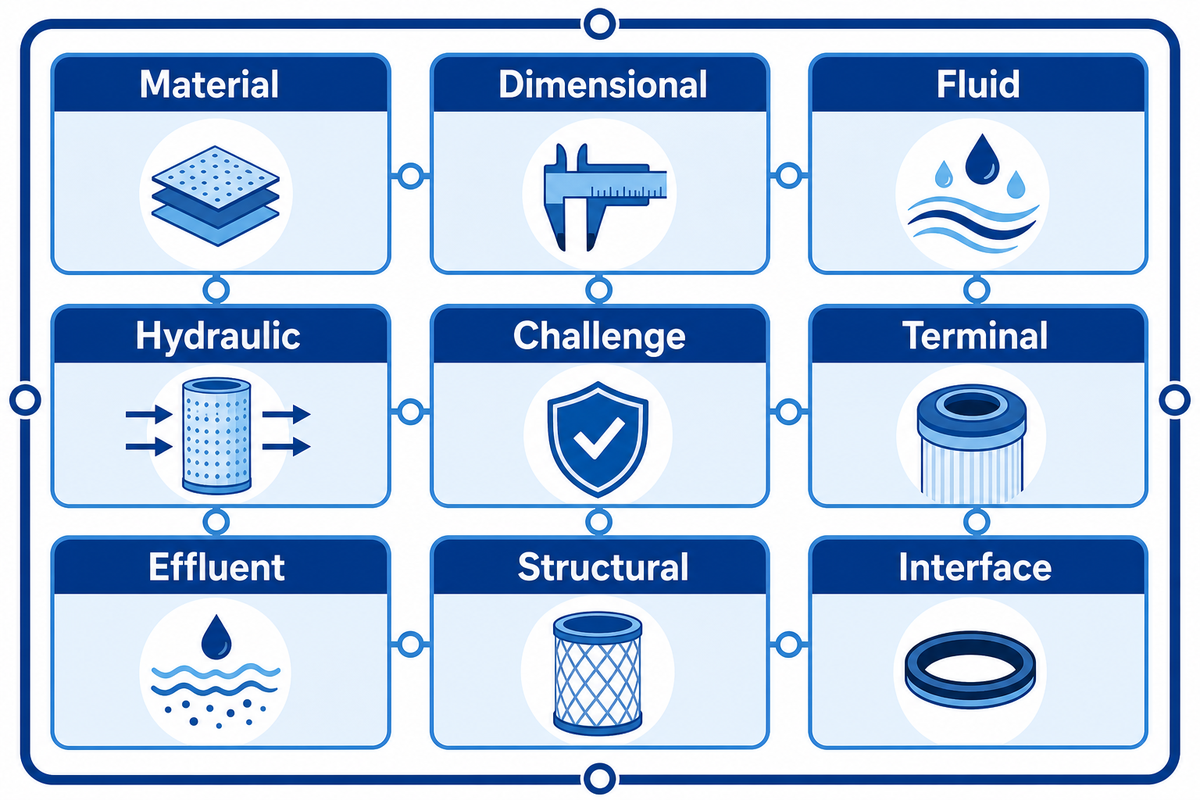
Finishing may result in changes to the contact geometry or first point of intersection with the cartridge. The loading result may be assessed through released contaminants, dirt capacity, filtration performance, and differential pressure; appearance alone can’t establish surface clogging, a low pressure drop, or a low initial pressure drop.
The strongest research evidence comes from liquid depth-filtration work. In such cases, the development of pressure drop and filter life during deposit loading defines the research boundary. The peer-reviewed loading study didn’t identify an external groove, and therefore supports observing loading rather than ranking finishes.
| Evidence type | Controlled field |
|---|---|
| Material | Resin and media build |
| Dimensional | Length, diameter, finish geometry |
| Fluid | Identity, temperature, viscosity |
| Hydraulic | Flow and initial pressure |
| Challenge | Particle distribution and concentration |
| Terminal | Change-out criterion |
| Effluent | Capture and release observations |
| Structural | Loaded element integrity |
| Interface | Seal and housing fit |
| Record field | Why it controls the result | Limitations / not suitable for |
|---|---|---|
| Media recipe and radial build | Prevents a density change from being credited to finish | Unknown recipe or mixed production lots |
| Cartridge dimensions | Holds exposed length and housing fit constant | Different lengths or sealing interfaces |
| Fluid and temperature | Controls viscosity, wetting, and compatibility | Water results transferred to another process liquid |
| Flow rate | Sets hydraulic loading | Different housings or parallel element counts |
| Particle challenge | Defines size distribution and concentration | Uncharacterized plant sediment |
| Initial differential pressure | Creates a comparable clean baseline | Different gauges or uncorrected plumbing loss |
| Terminal criterion | Defines when capacity or life ends | Unmatched change-out rules |
| Loaded mass and effluent data | Separates capture from simple pressure rise | Visual loading estimates |
| Loading-stage observations | Exposes breakthrough or late-stage release | Single start-and-end reading |
The 10-inch supplier’s chart, which used water at ambient conditions, applies only to that case study.
How surface forming changes the production-line scope
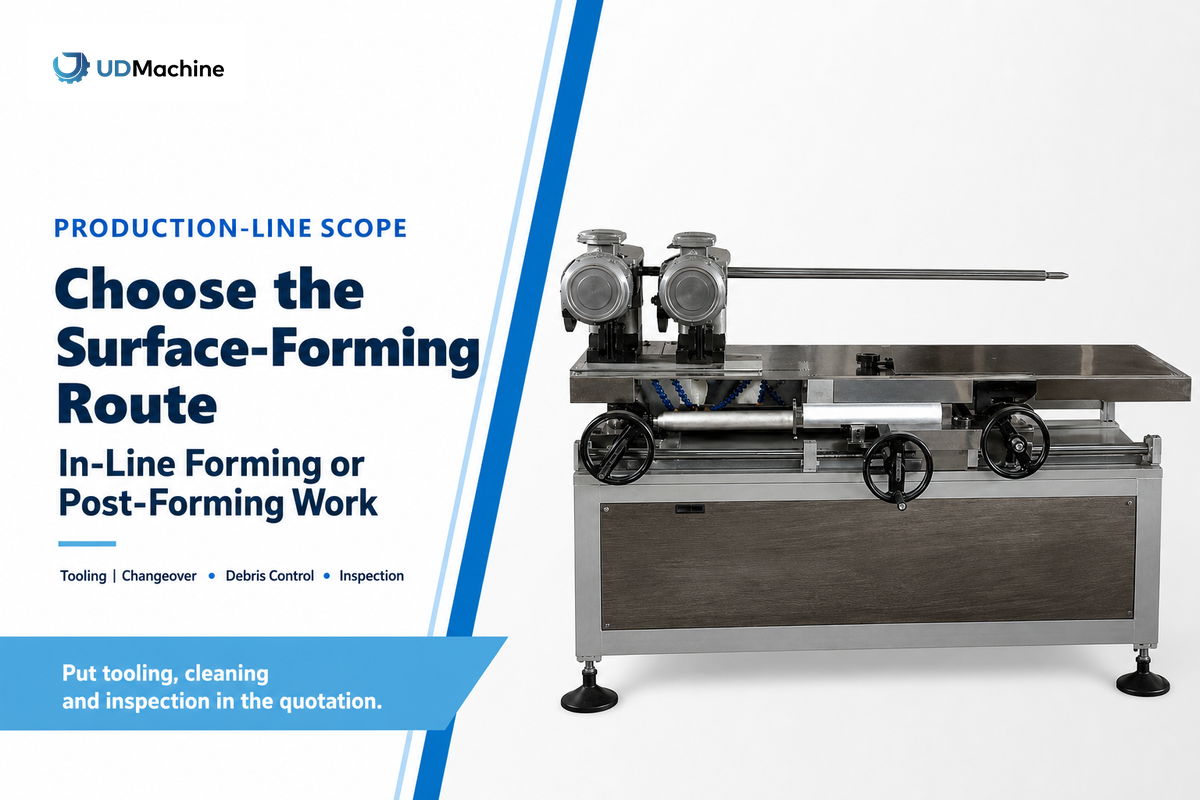
Within melt blown technology, finishing may occur during the forming process, in a downstream forming station, or during post forming; the selected route should record polypropylene construction and spun polypropylene inputs. Quotations for melt blown polypropylene filter cartridges may not imply that all grooves serve the same purpose.
Formed in-line
- Define die, collector, or forming-device ownership.
- Record line speed and forming settings with the sample.
- Verify repeatability through start-up and changeover.
- Keep finish evidence separate from filtration qualification.
Post-formed or machined
- Define support, datum, cutter, and change parts.
- Control dust, loose fiber, burrs, tearing, and glaze.
- Inspect geometry after cutting and cleaning.
- Assign waste removal and guarding in the scope.
The PP melt-blown machine overview explains the basic process steps. The production-line solutions hub routes adjacent process responsibilities.
The Surface-to-Evidence Fit Check: a five-step decision framework
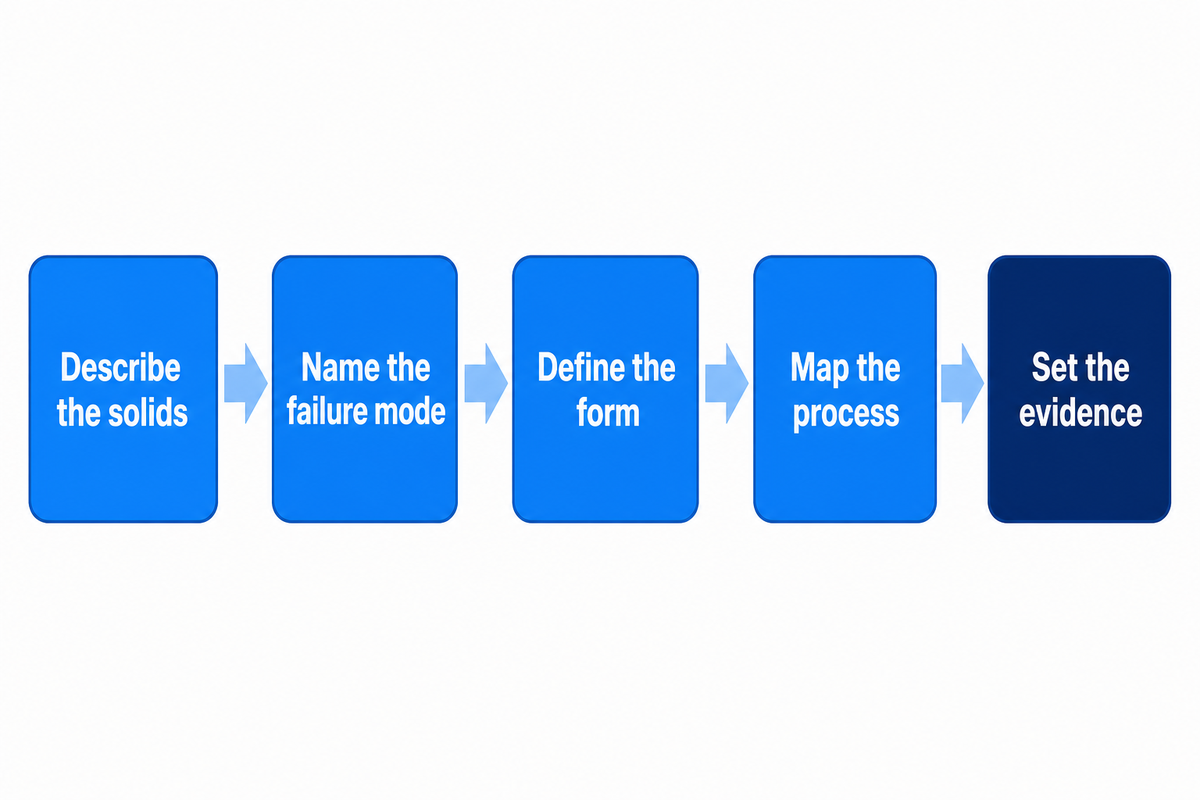
To assess the suitability of a special finish, ask five questions about solids, failure mode, form, process, and evidence. The EPRI pilot evaluation shows why influent, flow, pressure, effluent, sampling intervals, and stopping criteria belong on the same trial record. What’s the name and/or process description of the step in the operation that leads to the component being finished? What evidence shows that the special finish is needed? After answering these questions, decide whether to retain the component in its plain state or conduct a special-finish trial. Conduct the special-finish trial only after the supporting evidence is available.
- Describe the solids — record particle distribution, concentration, deformability, and whether loading is surface-dominant or depth-dominant.
- Name the failure mode — distinguish premature blinding, rising differential pressure, bypass, structural failure, shedding, or an unsupported life claim.
- Define the form — bind the proposed finish to dimensions, a sample, affected length, and end exclusions.
- Map the process — identify base-process settings, in-line forming, or post-forming work and their inspection points.
- Set the evidence — choose the common-basis trial, structural check, material qualification, and release record needed for the decision.
Key takeaway
The five-step finish decision is complete only when form, manufacturing route, and proof method point to the same approved revision.
When not to buy a special surface form
Special finishes should be deferred when the supplier can’t define the geometry, the trial changes more than one variable, the finishing route is absent from the quotation, or the buyer lacks a terminal criterion. A plain, controlled form is a better baseline than an unsupported high dirt-holding capacity label.
Turn an approved sample into a controlled specification
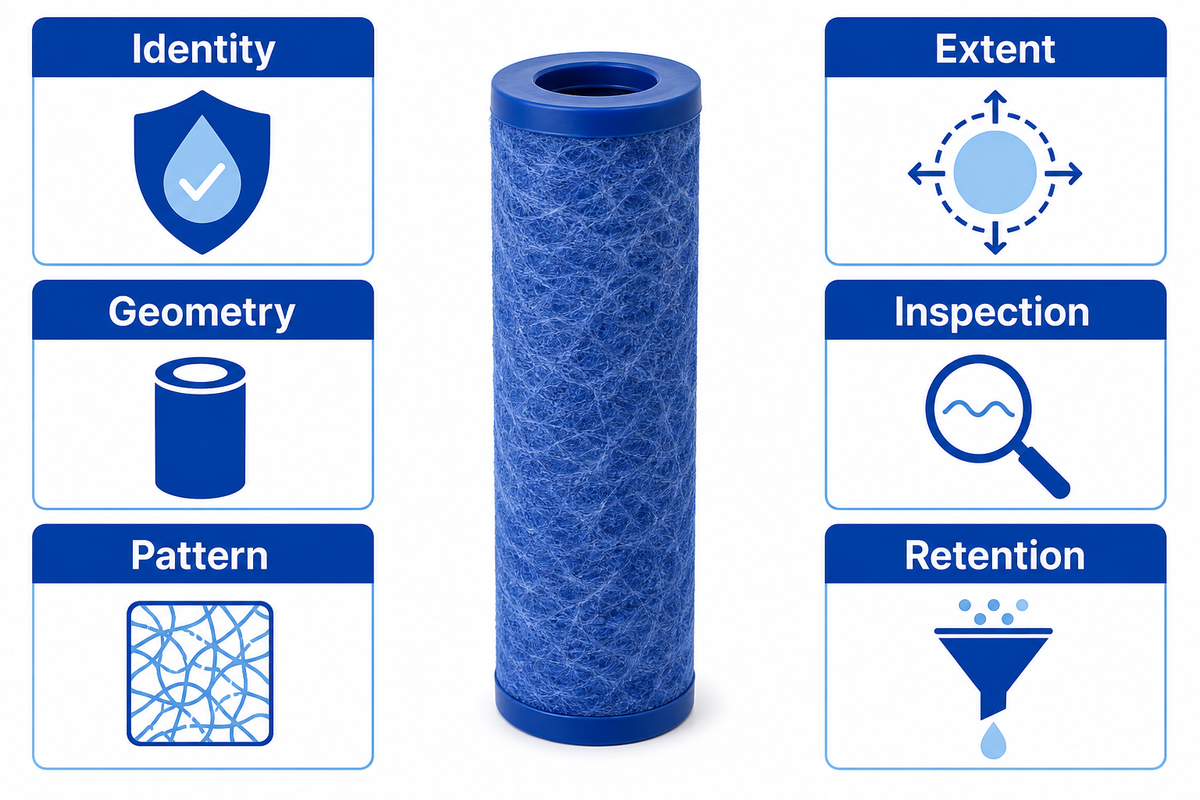
A specially finished component can’t settle a product specification dispute unless its identity, geometry, pattern, extent, inspection, and retention controls are recorded. Patent EP1633456A1 distinguishes groove patterns and surface-forming defects, supporting geometry and defect-limit controls in a retained sample.
Use project values, not generic defaults. An illustrative form might show 0.5 mm groove depth, 5 mm pitch, 250 mm affected length, 20 °C trial fluid, 10 L/min flow, a 50 kPa terminal criterion, and a 1 micron or 50 micron sediment filter target within a 1–100 micron range; every value must be replaced by the buyer’s approved basis.
Six-Field Surface Acceptance Record
- Identity: sample ID, product code, resin or media lot, drawing revision.
- Geometry: outside diameter, groove width, depth, pitch, or texture definition in declared units.
- Pattern: circumferential, longitudinal, spiral, grouped, or another named layout.
- Extent: affected length, start/end datum, and excluded sealing zones.
- Inspection: instrument, resolution, viewing distance, lighting, orientation, and sampling rule.
- Retention: approver, date, storage location, replacement rule, and change history.
Inspection and acceptance: visual, dimensional, structural, and functional evidence
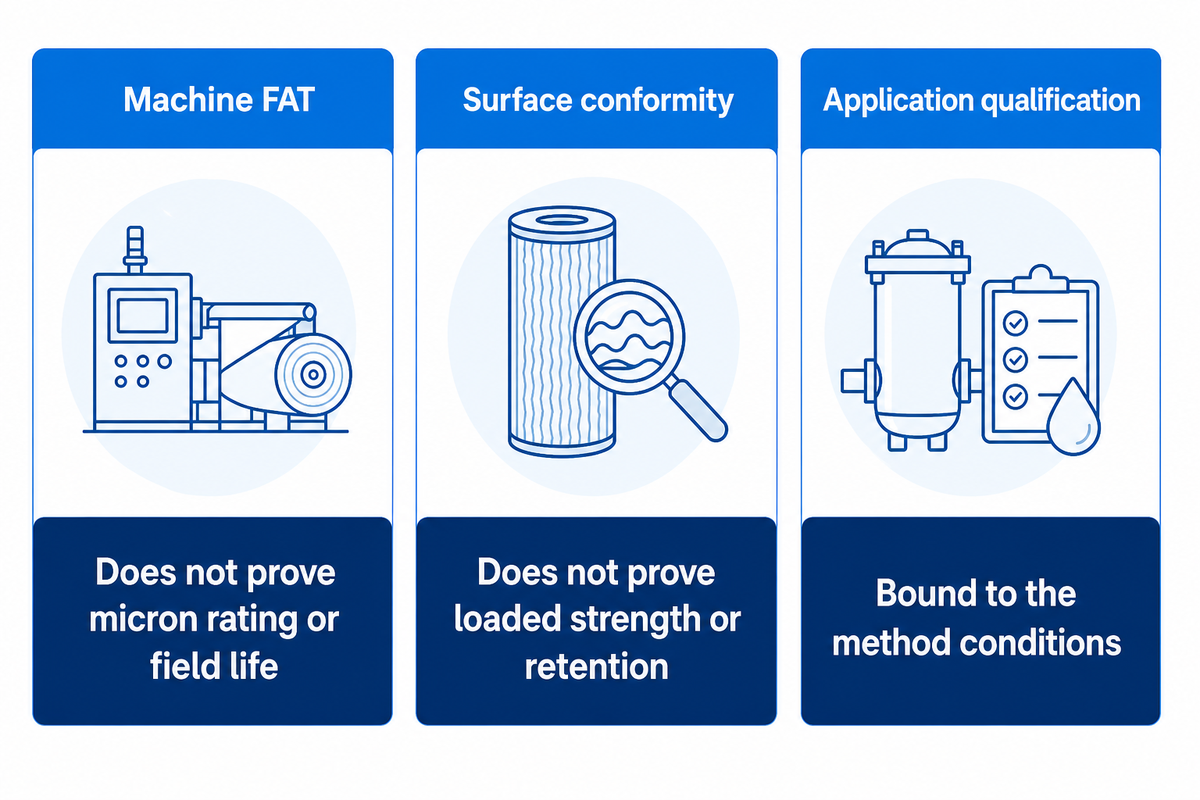
Acceptance asks four questions: did the machine create the agreed form, does the cartridge match the sample or drawing, does the loaded element retain its required strength, and does the finished cartridge satisfy the buyer’s filtration requirement? All four questions must be answered before the test can be accepted.
| Layer | Evidence | Does not prove |
|---|---|---|
| Machine FAT | Witnessed forming, setting record, sample output, repeatability | Micron rating or field life |
| Surface conformity | Visual limits, dimensions, affected length, cleanliness | Loaded collapse/burst resistance or retention efficiency |
| Application qualification | Applicable structural, compatibility, integrity, and filtration trials | Performance outside the method’s fluid, flow, contaminant, and interface scope |
The EPRI pilot test recorded influent conditions, particle counts, flow, pressure or headloss, sampling intervals, effluent data, and stopping criteria. A “same micron” condition doesn’t imply that all other conditions are also the same.
Membrane or hydraulic fluid tests won’t be adequate to assess a cartridge if their conditions don’t match the process-liquid cartridge.
Match finish decisions to application risks, not industry labels
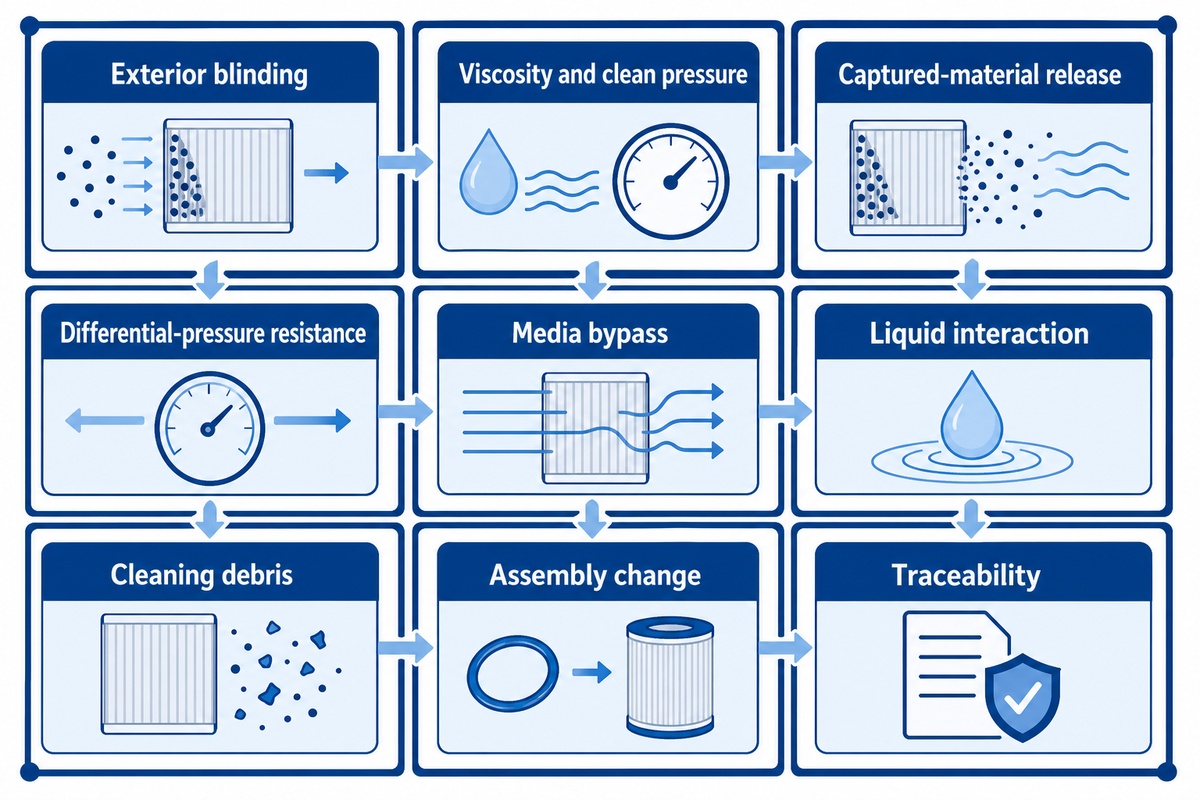
Labels such as food service, chemical processing, water filtration, reverse osmosis pre-filtration, or industrial water treatment provide little information for determining an appropriate finish. Consider fluid identity, temperature, viscosity, suspended solids, whether the cartridge must remove large particles, loading history, mechanical strength, the interface, cleaning, adsorption and desorption, and chemical compatibility requirements.
The Water Technology article pairs micron grade with verified efficiency data and differential-pressure monitoring. It doesn’t rank exterior finishes or prove that larger particles require a special surface.
| Risk question | Record before choosing a finish | Separate evidence owner |
|---|---|---|
| Will solids blind the exterior? | Size distribution, concentration, deformability | Process trial |
| Will viscosity raise clean pressure? | Fluid, temperature, viscosity, flow | Hydraulic trial |
| Can loading release captured material? | Effluent results across loading stages | Filtration qualification |
| Can the element resist rising differential pressure? | Maximum expected differential pressure and conditioning | Structural qualification |
| Can fluid bypass the media? | End condition, seal, housing, assembly | Interface or integrity test |
| Will the material change the liquid? | Contact time, temperature, chemistry, intended use | Compatibility and leachables program |
| Will cleaning leave debris? | Cutting route, loose fiber limit, cleaning method | Surface release inspection |
| Will a new finish change assembly? | End-zone geometry, cut length, end-cap interface | Assembly process review |
| Can the result be traced? | Lot, settings, sample revision, inspection result | Quality record |
What are the key differences between melt blown filters and string wound filters?
Melt-blown and string-wound cartridges use different media-forming routes, so a surface option on a melt-blown cartridge doesn’t turn it into a wound construction. Compare the process, media structure, particle-retention evidence, end condition, and application requirements; broad labels such as melt blown depth filter cartridges, melt blown polypropylene cartridges, polypropylene filter cartridge, and string wound filter cartridge don’t define a finish specification.
RFQ checklist for a PP melt-blown cartridge surface requirement
The RFQ should define the cartridge, finish samples, production flow, trial runs, and acceptance ownership. Provide these items with your request for a PP melt-blown filter cartridge production line to allow us to write the definition of finish at the correct production step.
Input the information in the table provided in the quote request, and edit the information according to the evidence provided by the customer.
RFQ checklist: surface requirement and evidence ownership
| Parameter | Required entry | Why it matters | How to verify |
|---|---|---|---|
| Cartridge construction | Resin, media route, core/end condition | Prevents finish from hiding a construction change | Approved BOM and sample ID |
| Finish definition | Drawing plus retained sample | Controls supplier vocabulary | Revision and scale check |
| Geometry | Pitch, width, depth, extent, end exclusions | Makes conformity measurable | Drawing-defined instrument |
| Process route | In-line form or post-form work | Defines module and debris-control scope | Witnessed trial and setting record |
| Trial material | Buyer-defined resin and feed basis | Prevents material drift | Lot and incoming record |
| FAT output | Run length, samples, settings, rejects | Shows repeatable machine function | Signed FAT record |
| Product qualification | Applicable structural, filtration, and compatibility methods | Separates machine output from use approval | Independent test report or buyer trial |
| Change control | Tool, recipe, sample, and drawing revision rules | Preserves the approved finish | Lot and revision history |
Compare downstream scope with the filter cartridge assembly process. Confirm ownership for cutting, end treatment, cleaning, inspection, and retained samples.
What 2025–2026 evidence changes, and what it does not prove
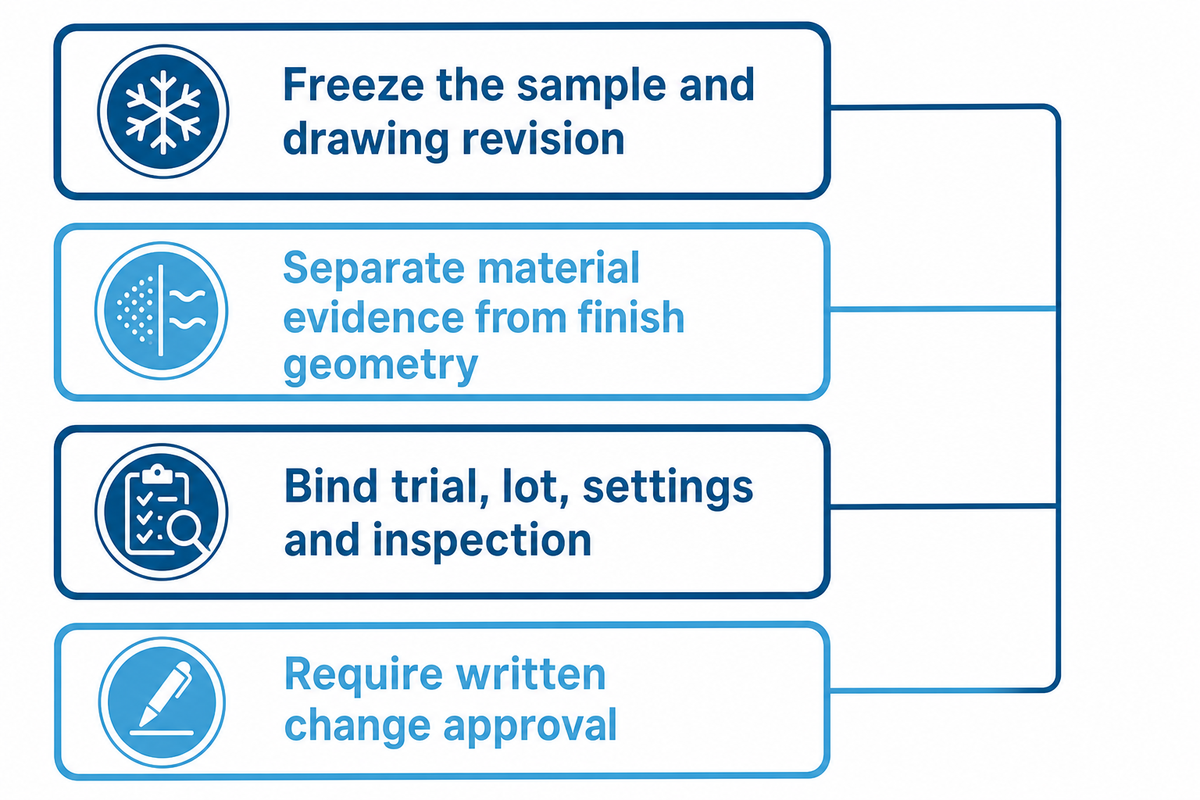
Current food-contact updates strengthen the case for controlled materials, manufacturing processes, and traceability records for the production revision and lot record. However, those updates don’t prove new market demand for cartridge finishes, annual growth for grooves, or a performance advantage.
The European Commission food-contact legislation page lists a 2025 amendment addressing quality control and manufacturing topics and a 2026 amendment concerning substance authorizations or conditions of use. Those dates matter to document control, not finish selection.
Buyer action for 2026 projects
- Freeze the sample and drawing revision used in the quotation.
- Record material and intended-use evidence separately from finish geometry.
- Bind trial conditions, lot identity, machine settings, and inspection results.
- Require written approval before tools, recipes, or acceptance methods change.
Suzhou UDTECH Technology Co., Ltd. reports a 6,000-square-meter standardized workshop, integrated R&D, production, domestic sales, global export, and technical after-sales service, with equipment exports to more than 55 countries. This information provides a potential business opportunity and commercial relationship, rather than filtration efficiency or other performance evidence.
Frequently asked questions
Which surface finishes are used on PP melt-blown filter cartridges?
Smooth, grooved, patterned, and textured terms appear in supplier literature, but the label needs a controlled drawing or retained sample before becoming an acceptance criterion.
Commercial vocabularies also use labels such as cavity, orange-peel, fuzzy, or micro-wave. These names are not standardized dimensions, and two suppliers may interpret the same word differently. The approved sample or drawing should therefore state geometry, pattern orientation, affected length, end exclusions, viewing conditions, and inspection method before the label becomes an acceptance requirement.
Why do some PP melt-blown filter cartridges have grooves or slots?
Grooves or slots alter exposed geometry and may support a loading-control design intent, but they don’t prove filtration capacity, efficiency, or service life without a controlled comparison.
The form can be created in-line or by later machining, and each route has different tooling, debris-control, cleanliness, change-part, and inspection needs. Grooves may support a loading hypothesis, but the label does not prove an outcome. Any efficiency, capacity, pressure-drop, or service-life benefit needs a common-basis test that isolates finish from media and process changes.
Does a grooved surface automatically give a longer service life?
No, a grooved surface does not automatically prove longer service life because fluid, loading, media construction, flow, and the terminal criterion also affect the result.
Service life depends on fluid, viscosity, flow, particle distribution, media build, efficiency, initial differential pressure, terminal criterion, and loading history. Compare smooth and grooved samples under the same recorded basis, keep cartridge dimensions and sealing interfaces constant, and track effluent as well as pressure throughout loading. Otherwise, the observed change cannot be assigned to finish alone.
What should an approved surface sample record?
Record identity, geometry, pattern, extent, inspection, and retention.
Include sample ID, material or lot, dimensions, scale and orientation, affected length, end exclusions, instrument, viewing conditions, approval owner, storage location, revision, and replacement rule.
How is surface finish different from micron rating, gradient density, and filter-media choice?
The four fields describe different properties and need different proof: surface finish, micron rating, gradient density, and filter-media choice require their own drawing, material record, process record, or performance evidence.
Surface finish is visible outer geometry. Micron rating is a retention claim under stated conditions; gradient density describes radial structure; media choice covers resin, fiber formation, additives, and other construction variables. Photographs can control visible form but cannot verify retention, pore distribution, wettability, compatibility, adsorption, or extractables. Put each field on its own RFQ line and assign a matching drawing, material record, process record, or performance test.
Turn the finish label into an acceptance record
Send the approved sample, drawing, process route, trial basis, and evidence ownership with your project brief. UDTECH can then review the requested surface-forming scope against the proposed polypropylene (PP) melt-blown line configuration.
Related UDTECH resources
References & Sources
- eCFR, 21 CFR 177.1520, Olefin polymers
- Chemical Engineering Research and Design, liquid depth-filtration loading study
- Google Patents, EP1633456A1 filter-element fabrication disclosure
- EPRI, Pilot Evaluation of Bag and Cartridge Filters
- Water Technology, RO prefiltration operating guidance
- European Commission, food-contact-material legislation
This guide separates visible finish specification from production-line configuration and application qualification. It doesn’t replace a buyer’s material, structural, filtration, compatibility, or regulatory review.